Is a Large-Scale Non-Incisional Hair Transplant Safe? Key Standards for Graft Survival and Donor Area Preservation
Why do patients requiring large-scale hair transplants hesitate to choose the non-incisional (FUE) method?
For patients suffering from advanced stages of androgenetic alopecia, restoring coverage typically requires extracting and transplanting a massive volume of hair—often exceeding 4,000 hairs (approximately 2,000 or more follicular units). In the past, the strip-harvesting follicular unit transplantation (FUT) method was preferred for such large-scale procedures due to faster extraction times and lower initial follicular damage. However, modern clinical developments in plastic surgery have shifted the paradigm toward non-incisional Follicular Unit Extraction (FUE) because of its minimal scarring, reduced post-operative pain, and rapid recovery. Despite these benefits, patients often face critical concerns regarding whether a large-scale non-incisional transplant can deliver a comparable graft survival rate and whether it will leave the donor area looking excessively sparse or patchy.
Treatment timing: Ideal when androgenetic alopecia has advanced to Norwood Scale Stage 4 or higher, and the active hair loss phase has been stabilized with pharmacological therapy.
Non-surgical care: Conservative management using 5-alpha reductase inhibitors and topical minoxidil is reasonable during early hair thinning stages (Norwood Stage 1 to 3) or as a preparatory phase to stabilize active shedding before undergoing surgery.
Treatment selection: Driven by an objective evaluation of donor hair density (measured via trichoscopy), scalp laxity, the estimated follicular transection rate, and the patient’s aesthetic expectations regarding donor area scar visibility.
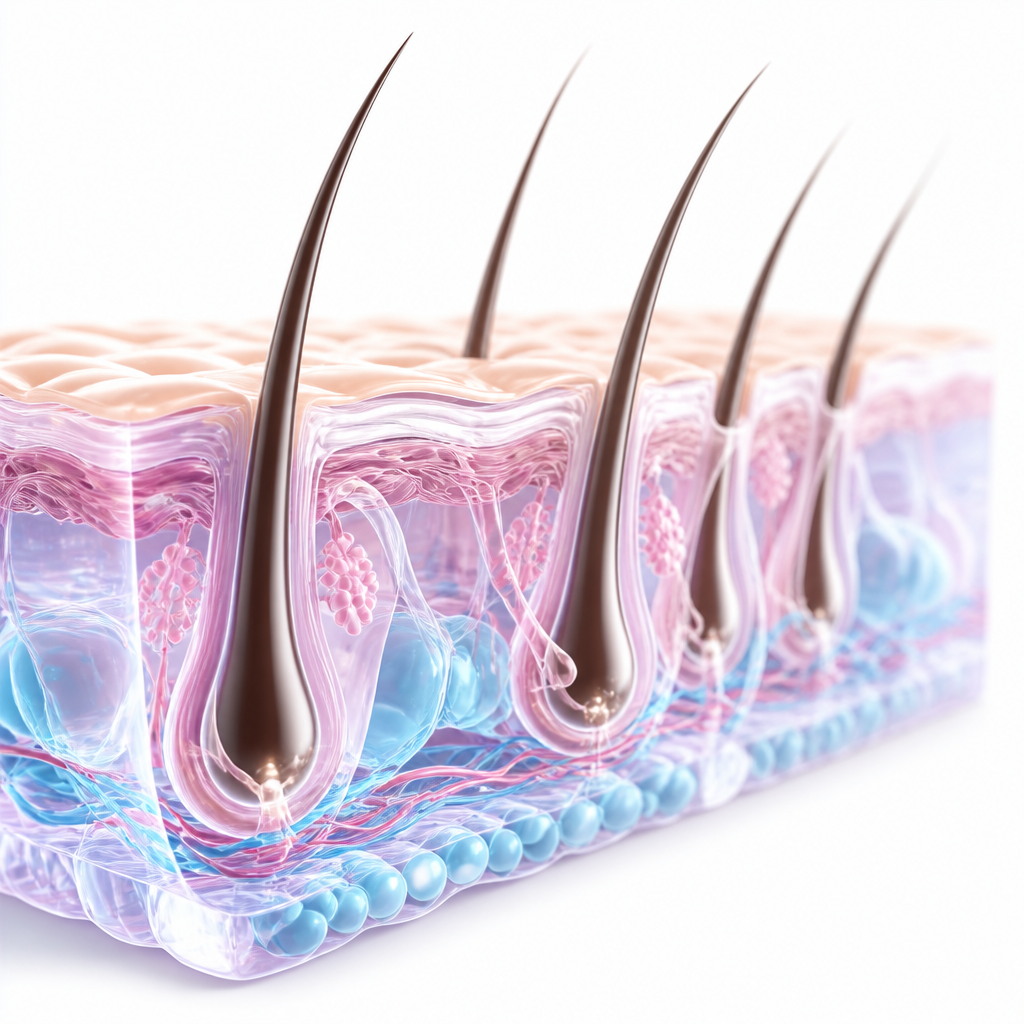
How does the biological mechanism of non-incisional harvesting affect the overall success of large-scale transplants?
The biological foundation of a successful hair transplant relies on the principle of donor dominance, where hair follicles harvested from the occipital (back) and temporal (side) areas of the scalp retain their genetic resistance to dihydrotestosterone (DHT) even when relocated to balding zones. Follicular Unit Extraction (FUE) is a microsurgical technique where individual follicular units containing one to four hairs are extracted one by one using micro-punches (typically 0.8mm to 1.0mm in diameter). Because hair loss is progressive, the safe harvesting zone must be carefully mapped to ensure that the extracted grafts are genuinely DHT-resistant and will persist long-term. In large-scale FUE procedures, also known as megasessions, maintaining the viability of these delicate anatomical structures during the extraction, storage, and implantation phases is paramount.
One of the primary challenges of a large-scale non-incisional transplant is the risk of follicular transection, which occurs when the micro-punch cuts through the hair bulb or shaft beneath the skin surface. High transection rates directly reduce the number of viable grafts, compromising the final density. According to multiple observational studies and meta-analyses, keeping the surgical transection rate below 3% to 5% is critical for optimizing outcomes. Furthermore, the out-of-body time (ischemia time) of the harvested follicles must be strictly controlled, as graft survival decreases progressively after 4 to 6 hours of deprivation from physiological blood supply. Therefore, clinical teams must employ specialized chilling solutions and highly coordinated implantation workflows to minimize graft transit times.
| Parameter | Non-Incisional FUE (Megasession) | Incisional Strip FUT (Megasession) |
|---|---|---|
| Harvesting Method | Individual extraction using micro-punches | Excision of a horizontal strip of donor scalp |
| Donor Area Scarring | Tiny, diffuse dot scars (virtually invisible) | A linear scar across the back of the scalp |
| Recovery Time | Rapid (typically 3 to 5 days) | Extended (requires suture removal in 10-14 days) |
| Key Limitation | Requires a larger donor area and longer surgical times | Limited by scalp elasticity; visible linear scar |
According to official guidelines from the International Society of Hair Restoration Surgery (ISHRS), both quantitative criteria such as donor density and clinical judgment regarding follicular unit damage must be reviewed together to prevent over-harvesting during megasessions.
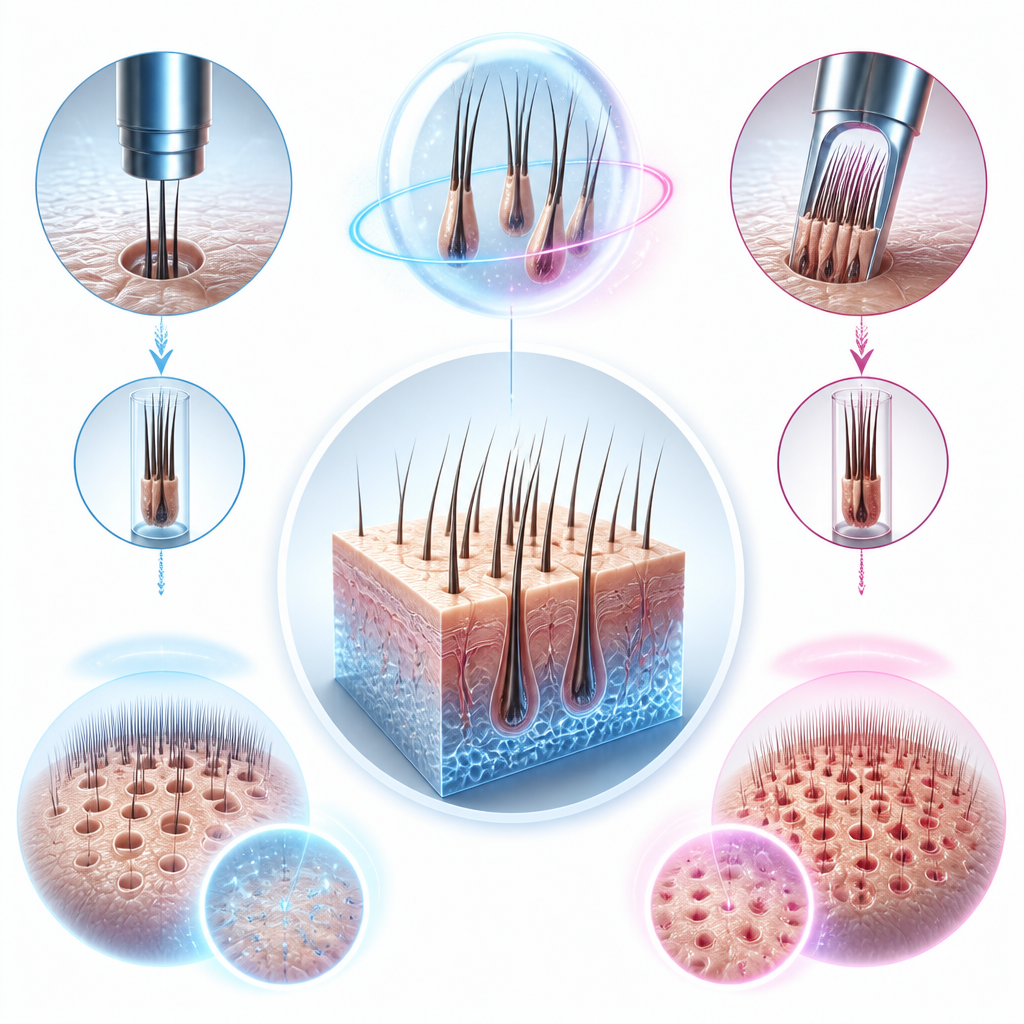
What clinical criteria determine the limits of conservative treatment before committing to a megasession?
Before proceeding with a large-scale transplant, clinicians must establish whether the patient is an appropriate candidate or if conservative therapies remain the more rational pathway. Non-surgical management, including oral finasteride or dutasteride and topical minoxidil, acts to block the conversion of testosterone to DHT, thereby preserving existing terminal hairs and stabilizing active shedding. If a patient is experiencing early-stage thinning (Norwood Scale Stage 1 to 3) without extensive bald areas, maintaining pharmacological therapy for at least 6 to 12 months is highly recommended. This conservative approach helps clarify the true boundaries of the hair loss pattern and prevents premature surgical intervention, which could lead to unnatural-looking results as native hair continues to recede.
However, once the hair loss progresses to a point where the dermal papilla structures have completely degenerated, leaving extensive bald areas on the frontal hairline or crown, non-surgical methods can no longer regenerate lost follicles. At this stage, surgical restoration becomes the primary therapeutic option. For a successful megasession, the donor area must possess sufficient follicular unit density (typically greater than 60-80 follicular units per square centimeter) and adequate hair shaft caliber. According to domestic and international clinical guidelines, extracting more than 25% of the total donor density in a single FUE session is generally discouraged to avoid a patchily depleted donor appearance. Thus, pre-operative trichoscopic measurements are crucial to balance the desired coverage against the preservation of donor reserves.
If-Then Decision-Making Flow for Large-Scale Hair Restoration:
- Step 1 (If): If active hair loss is diagnosed, then initiate a 6-to-12-month course of FDA-approved medical therapy to stabilize the hair loss progression.
- Step 2 (Then): If the hair loss stabilizes but leaves significant bald areas (Norwood Stage 4+), then perform a comprehensive trichoscopic analysis of the donor area density and elasticity.
- Step 3 (Outcome): If donor density is sufficient (exceeding 70 FU/cm²), then plan a non-incisional FUE megasession with an extraction limit below 25% to maximize safe coverage.
Essential Clinical Checklist for FUE Megasessions:
- Evaluating individual follicular unit composition (ratio of 2-to-4-hair grafts versus single-hair grafts) to maximize density.
- Measuring the precise diameter of the hair shafts to ensure optimal coverage per transplanted follicle.
- Calculating the safe extraction boundary to preserve the natural aesthetic of the donor area.
- Verifying the absence of active scalp inflammation or scarring alopecia before surgical planning.
- Optimizing the implantation strategy, such as prioritizing the frontal hairline with single-hair grafts for natural aesthetics.
Furthermore, surgical success is highly dependent on technical execution during the extraction phase. When planning a megasession, a multidisciplinary team is essential to keep the total procedure duration within safe limits. However, outcomes may differ in exceptional cases such as patients with poor microcirculation, history of smoking, or keloid-prone skin, which can negatively affect follicular healing and overall graft survival.
Frequently Asked Questions FAQ
QDoes a large-scale non-incisional transplant cause visible thinning in the donor area?
If the extraction density is managed correctly, it should not cause visible thinning. Specialists limit graft extraction to approximately 20-25% of the total donor follicular units, leaving a sufficient number of surrounding follicles to maintain full coverage and avoid a patchy or thin appearance in the back of the head.
QWhat is the expected recovery timeline after a 4,000-hair FUE megasession?
Initial healing of the micro-punches occurs within 3 to 5 days, during which minor swelling may peak. Tiny scabs will form and naturally shed off within 10 to 14 days. The transplanted hair will then enter a temporary shedding phase (shock loss) between weeks 2 and 8, with permanent new hair growth initiating around month 3 to 4, and final density achieved at 12 months.
QCan a patient undergo a second hair transplant after a large-scale FUE?
A second transplant is possible only if the patient has sufficient donor density remaining. If the first session extracted the safe maximum limit, further FUE might be restricted. This highlights the importance of conservative first-time planning and preserving donor reserves for future progression.
This content is general medical information, and individual treatment decisions should be made through imaging tests and in-person medical evaluation.
Author: Medical content editor based on medical information research
Reviewed by: Specialist consultation from the relevant department
Last reviewed: 2026-07-14
Reference guideline: 2022 International Society of Hair Restoration Surgery (ISHRS) Clinical Practice Guidelines
Medical neutrality and closing note
The core of medical decision-making is not to follow a specific device or a trending procedure, but to choose an option that fits each patient’s individual anatomy, condition, risk level, and treatment goals. Every procedure has both advantages and limitations, so decisions should be made after sufficient discussion with an experienced specialist.
[Medical information and copyright notice]
This content is a professional medical column prepared based on medical consultation from 제이케이성형외과의원.
The infographics used in this article are created to support understanding and may differ from actual clinical results.
The information provided is a general medical guideline, and accurate diagnosis and treatment require an in-person evaluation by a qualified specialist.