What Is the Actual Recovery Period After Underfold Incision Breast Augmentation?
Why Do Many Patients Choose the Inframammary Fold Incision?
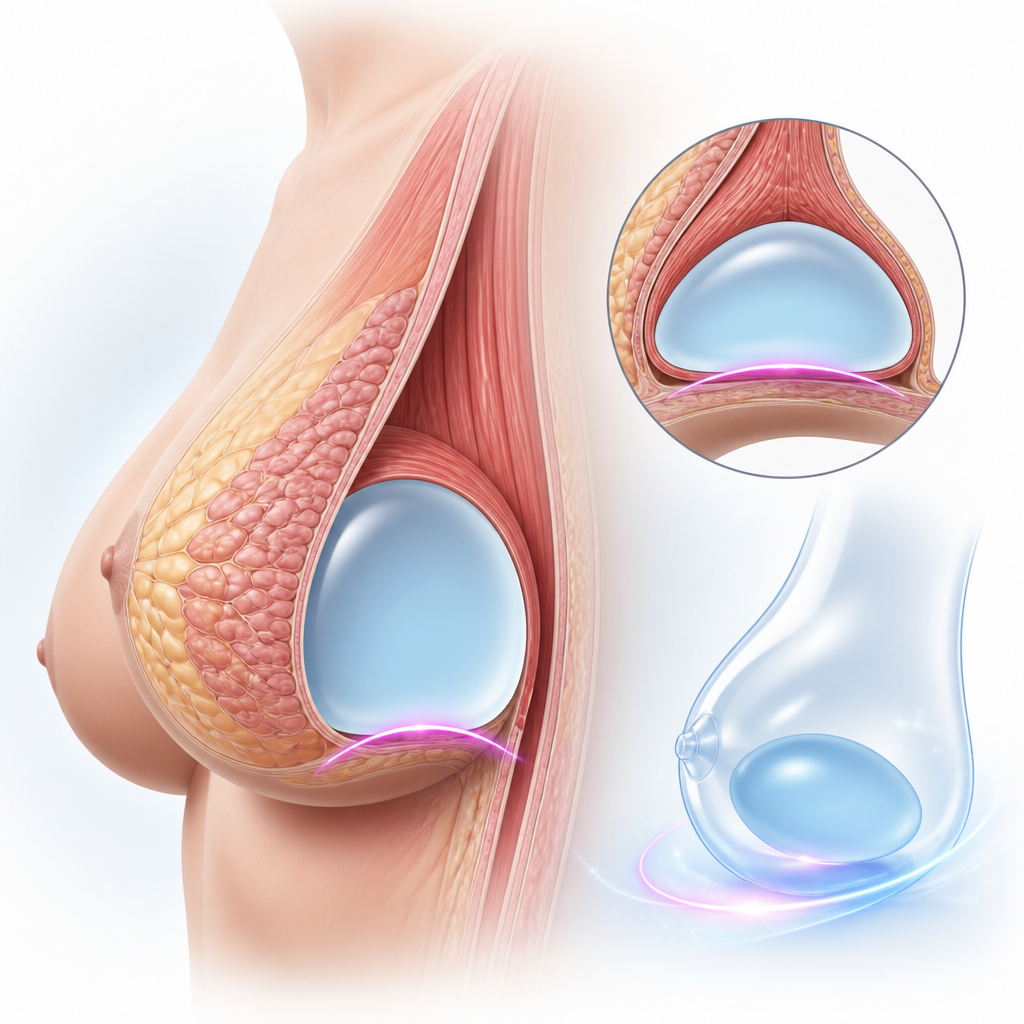
When planning breast surgery, the recovery period and postoperative scar management are among the most critical pain points for patients. Among various surgical approaches, the underfold incision—scientifically known as the inframammary fold (IMF) incision—is highly favored for its direct access and predictable healing timeline. Anatomically, the inframammary fold approach involves a surgical incision along the natural lower crease of the breast, permitting direct visualization of the subpectoral or subglandular pocket without disrupting the delicate mammary gland tissue, resulting in a highly controlled and progressive healing process.
By avoiding parenchymal dissection of the breast tissue, this approach preserves the natural anatomy of the breast glands and nerves, minimizing sensory loss in the nipple-areola complex. Consequently, early-stage inflammation is reduced, and the risk of acute post-operative bleeding is significantly lowered. Patients who are particularly concerned about the recovery period often select this method because it bypasses the high-mobility areas of the upper body, such as the axilla (armpit), leading to fewer restrictions in arm movement immediately after surgery.
Treatment timing: The procedure is ideal for individuals seeking a rapid return to daily routines, with initial superficial skin closure healing occurring within 7 to 10 days post-surgery.
Non-surgical care: Conservative management post-surgery involves wearing a specialized surgical compression bra, meticulous scar care using silicone-based gels, and avoiding heavy lifting (above 5kg) for at least 4 to 6 weeks.
Treatment selection: The clinical decision to use the IMF incision depends heavily on the patient’s existing inframammary fold definition, skin elasticity, implant volume goals, and their personal tolerance for a scar situated on the lower breast crease.
How Does the IMF Incision Compare with Other Approaches in Recovery?
According to multiple observational studies and meta-analyses, including clinical data published in the Aesthetic Surgery Journal (2021), patients undergoing breast augmentation via the inframammary fold approach experienced lower immediate postoperative pain scores and required fewer opioid analgesics compared to those who underwent transaxillary (armpit) approaches. Because the surgeon has a direct line of sight during pocket creation, the surgical trauma to the pectoralis major and surrounding fascia is highly localized, minimizing the overall inflammatory response.
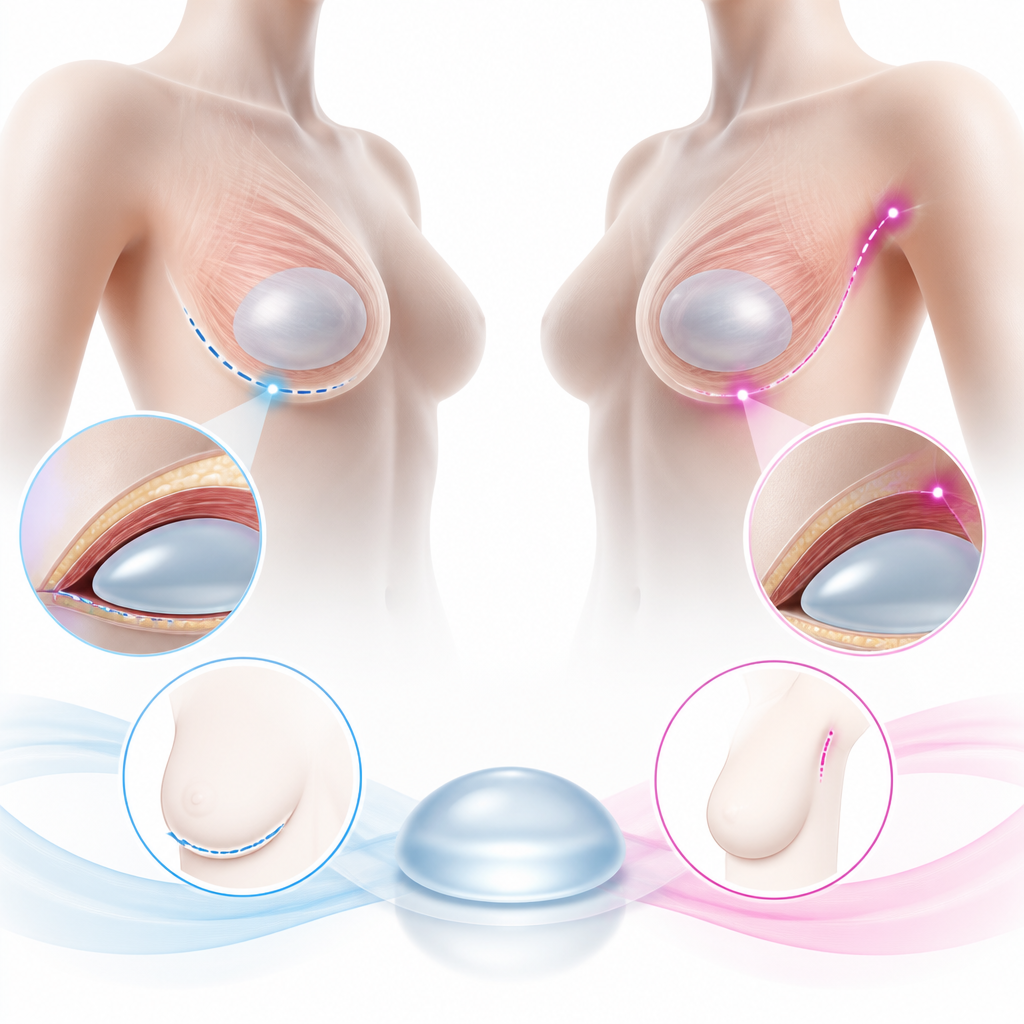
However, every surgical approach has its distinct clinical trade-offs. While the underfold approach offers superb control and minimal early pain, it does place the resulting scar directly on the breast itself, unlike the transaxillary approach which hides the scar in the armpit crease. Below is a comprehensive comparison of the main incision pathways:
| Incision Type | Key Advantage (Recovery) | Clinical Limitation | Est. Return to Work |
|---|---|---|---|
| Underfold (IMF) | Direct pocket visualization, minimal arm mobility restriction | Scar is located on the breast base (visible when lying down) | 3 to 5 Days |
| Transaxillary (Armpit) | Scar is hidden within the natural axillary crease | Indirect pocket dissection, temporary arm movement limitation | 7 to 10 Days |
| Periareolar | Excellent camouflage along the dark border of the areola | Dissection through breast tissue, higher risk of ductal exposure | 5 to 7 Days |
According to official guidelines from international plastic surgery societies, both quantitative measurements (such as pocket width and parenchymal thickness) and clinical judgment regarding scar placement preferences must be thoroughly evaluated together.
What Is the Step-by-Step Recovery Timeline?
Understanding the chronological phases of healing helps reduce patient anxiety and improves compliance with postoperative care protocols. The recovery of the subpectoral pocket and the overlying skin incision proceeds through distinct biological phases: inflammatory, proliferative, and remodeling.
During the first 72 hours, managing acute tissue edema and maintaining implant positioning are the primary goals. As the tissue transitions into the proliferative phase, the risk of acute hematoma decreases, and the focus shifts to scar maturation and pocket stabilization. To guide your recovery safely, follow this timeline checklist:
- Days 1 to 3: Expect moderate swelling and a feeling of chest tightness. Wear the supportive compression surgical bra continuously as instructed by plastic surgery.
- Day 7 to 10: Incision stitches are evaluated and typically removed if non-absorbable sutures were utilized. Skin-closure tapes are replaced to minimize tension.
- Week 3 to 4: Gentle range-of-motion stretching for the arms can be performed. Transition from a surgical bra to an approved wire-free supportive sports bra.
- Month 3: The implant settles downward into its natural position, and the initial rigid firmness of the breast tissue begins to soften.
- Month 6+: The scar matures from pink/red to a faded, pale flat line, and the capsule surrounding the implant stabilizes.
To help navigate these recovery milestones, clinical specialists utilize a standard 3-step decision flow based on patient symptoms:
Step 1: If acute asymmetry or unilateral severe pain occurs within the first 48 hours, immediately contact plastic surgery to evaluate for potential hematoma or seroma formation.
Step 2: If the incision has closed smoothly by Week 2, initiate targeted silicone sheet or gel therapy to prevent hypertrophic scarring.
Step 3: If tightness or localized firm capsule formation is suspected around Month 3, undergo a comprehensive ultrasound evaluation to monitor for early signs of capsular contracture.
However, outcomes may differ in exceptional cases such as patients with connective tissue disorders, keloid-prone skin profiles, or poor compliance with postoperative compression and scar therapy guidelines.
Frequently Asked Questions FAQ
QIs the postoperative pain severe with an underfold incision?
Compared to other approaches, the underfold incision involves less muscle and tissue disruption, resulting in lower pain scores. Most patients manage the discomfort effectively using prescribed oral medications for the first 3 days.
QWhen can I resume exercise and sports?
Light lower-body walking can begin immediately after surgery. However, strenuous upper-body workouts, running, or swimming should be postponed for at least 4 to 6 weeks to prevent implant displacement and incision tension.
QHow long does it take for the scar under the breast to fade?
The scar undergoes remodeling over a 6 to 12-month period. Initially, it will appear red and slightly raised, but with consistent silicone scar treatment, it eventually fades into a thin, flesh-colored line hidden within the natural breast crease.
This content is general medical information, and individual treatment decisions should be made through imaging tests and in-person medical evaluation.
Author: Medical content editor based on medical information research
Reviewed by: Specialist consultation from the relevant department
Last reviewed: 2026-06-18
Reference guideline: 2022 Aesthetic Surgery Education and Research Foundation (ASERF) Clinical Guidelines
Medical neutrality and closing note
The core of medical decision-making is not to follow a specific device or a trending procedure, but to choose an option that fits each patient’s individual anatomy, condition, risk level, and treatment goals. Every procedure has both advantages and limitations, so decisions should be made after sufficient discussion with an experienced specialist.
[Medical information and copyright notice]
This content is a professional medical column prepared based on medical consultation from 제이케이성형외과의원.
The infographics used in this article are created to support understanding and may differ from actual clinical results.
The information provided is a general medical guideline, and accurate diagnosis and treatment require an in-person evaluation by a qualified specialist.