Sinsa-dong Plastic Surgery: Selecting Motiva Breast Augmentation for Natural Movement and Safety
What Makes Motiva Breast Augmentation a Key Consideration for Natural Results?
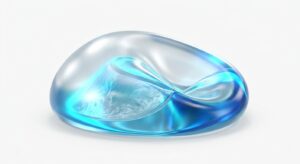
For patients considering aesthetic enhancement in Sinsa-dong, breast augmentation has evolved beyond merely increasing size. The modern paradigm emphasizes natural movement, tactile softness, and long-term surgical safety. Among various premium options, Motiva breast implants have gained significant clinical recognition due to their innovative material science and physiological adaptability. Unlike traditional implants that maintain a rigid shape, this advanced cohesive gel technology behaves dynamically, mirroring natural breast tissue during physical movement.
Treatment timing: Ideal for patients seeking permanent volume correction who have completed physical breast development (typically over 20 years old) and have stable tissue conditions.
Non-surgical care: Conservative approaches such as external bra enhancement or autologous fat grafting are reasonable for minor asymmetry or when less than 100cc of volume increase is desired.
Treatment selection: Final implant selection must consider the patient’s chest wall width, base diameter, skin elasticity, parenchymal thickness, and lifestyle requirements.
How Does the Biomechanics of Motiva Implants Mimic Natural Breast Tissue?
Breast augmentation using premium implants is a surgical procedure designed to correct mammary hypoplasia or asymmetry. Anatomically, the breast consists of adipose tissue, glandular parenchyma, and the supporting Cooper’s ligaments overlying the pectoralis major muscle. Motiva implants utilize a highly cohesive silicone gel that exhibits Ergomotion, shifting from a round shape when lying down to a natural teardrop shape when standing, thereby minimizing mechanical stress on the surrounding parenchymal tissue. This progressive adaptability reduces the risk of long-term tissue thinning and implant visibility.
According to multiple observational studies and meta-analyses published in the Aesthetic Surgery Journal (2021), the rate of progressive capsular contracture—a condition where the body forms an abnormally thick fibrotic tissue capsule around the foreign object—remains below 1.2% over a five-year follow-up period due to the advanced micro-textured surface topography of the implant shell.
| Feature | Motiva Ergonomix | Traditional Round Implants |
|---|---|---|
| Gel Behavior | Dynamic flowability (shifts with gravity) | Static shape retention (remains round) |
| Shell Surface | SmoothSilk/SilkSurface (micro-textured) | Textured or completely smooth |
| Primary Limitation | Higher manufacturing expense compared to older models | Increased risk of rippling and palpability |
According to official guidelines of the International Society of Aesthetic Plastic Surgery (ISAPS), both quantitative anatomical measurements and subjective clinical expectations must be synthesized to determine the optimal implant profile.
What Are the Essential Clinical Selection Criteria for Sinsa-dong Candidates?
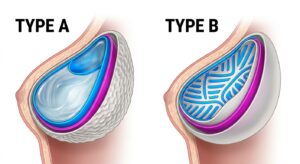
Before undergoing surgery, patients visiting plastic surgery clinics in Sinsa-dong must undergo a thorough diagnostic evaluation. Selecting the appropriate implant profile requires more than just choosing a target cup size; it requires a detailed analysis of the thoracic cage.
Here is the essential pre-operative evaluation checklist used by specialists:
- Parenchymal Pinch Test: Assessing the subcutaneous fat thickness to ensure adequate implant coverage. If the pinch test is less than 2cm, dual-plane placement is highly recommended to prevent implant visibility.
- Thoracic Base Width (BW): Measuring the exact horizontal dimension of each breast to determine the maximum implant diameter.
- Skin Elasticity and Laxity: Evaluating the compliance of the skin envelope to prevent premature tissue sagging or bottoming-out.
- Asymmetry Mapping: Analyzing differences in the inframammary fold (IMF) height and chest wall symmetry.
Clinical Decision-Making Flow:
- If the patient has a pinch test measurement of <2cm and minimal pre-existing glandular tissue, Then a dual-plane placement technique is utilized to ensure soft-tissue coverage.
- If the patient has an active, athletic lifestyle, Then Motiva Ergonomix with its high elasticity and low friction surface is preferred over traditional textured implants.
- If significant ptosis (sagging) is present, Then a combined mastopexy (breast lift) must be planned alongside implant insertion, as implants alone do not correct severe tissue laxity.
However, outcomes may differ in exceptional cases such as patients with severe pre-existing chest wall deformities like pectus excavatum, where custom pocket dissection strategies are required to prevent implant malposition.
Frequently Asked Questions FAQ
QWhat is the expected recovery timeline after Motiva breast augmentation?
Most patients experience the resolution of acute swelling within 7 to 14 days post-surgery. Light daily activities can be resumed after 1 week, but heavy lifting and high-impact exercises must be avoided for at least 4 to 6 weeks to ensure proper tissue integration and pocket stabilization.
QDoes Motiva breast augmentation require post-operative massage?
No. Thanks to the highly biocompatible SmoothSilk surface texture, Motiva implants do not require the painful post-operative massages often associated with older textured implants. In fact, aggressive massage is contraindicated as it can disrupt the healing tissue-to-implant interface.
QHow does the safety profile of Motiva compare to other implants?
Clinical data over a 10-year period indicates a significantly lower incidence of capsular contracture, rupture, and late seroma. The inclusion of BluSeal barrier technology allows visual confirmation of shell integrity prior to insertion, adding an extra layer of clinical safety.

This content is general medical information, and individual treatment decisions should be made through imaging tests and in-person medical evaluation.
Author: Medical content editor based on medical information research
Reviewed by: Specialist consultation from the relevant department
Last reviewed: 2026-06-19
Reference guideline: 2023 International Society of Aesthetic Plastic Surgery (ISAPS) Clinical Guidelines
Medical neutrality and closing note
The core of medical decision-making is not to follow a specific device or a trending procedure, but to choose an option that fits each patient’s individual anatomy, condition, risk level, and treatment goals. Every procedure has both advantages and limitations, so decisions should be made after sufficient discussion with an experienced specialist.
[Medical information and copyright notice]
This content is a professional medical column prepared based on medical consultation from 제이케이성형외과의원.
The infographics used in this article are created to support understanding and may differ from actual clinical results.
The information provided is a general medical guideline, and accurate diagnosis and treatment require an in-person evaluation by a qualified specialist.