Is Non-Surgical MiraDry Safe for Sweating Without Damaging the Skin Layer?
Why Do Patients Seek Non-Surgical Solutions for Underarm Sweat and Odor?
Axillary hyperhidrosis and osmidrosis present significant physiological and psychological burdens to affected individuals. Traditionally, permanent solutions required invasive surgical excision of the sweat glands or thoracic sympathectomy, which carry risks of scarring, compensatory sweating, and prolonged recovery periods. The introduction of non-surgical microwave thermolysis has revolutionized treatment paradigms by offering an effective, long-term solution with minimal downtime. However, patients frequently question whether a treatment that destroys deep-seated sweat glands can be performed safely without causing thermal damage to the delicate outer skin layers.
Treatment timing: Initiated when axillary hyperhidrosis or osmidrosis severely impacts daily life and fails to respond to topical antiperspirants.
Non-surgical care: Conservative management (antiperspirants, botulinum toxin) is reasonable for temporary relief, but fails to provide a permanent reduction in sweat gland density.
Treatment selection: Clinical decisions must prioritize matching energy delivery depths with the patient’s specific dermal-fat junction thickness to ensure efficacy and epidermal safety.
How Does Microwave Thermolysis Protect the Epidermis?
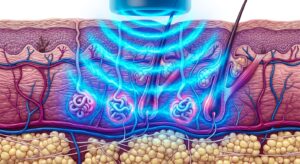
To understand how the procedure works, it is essential to examine the pathophysiology of the axillary skin. The eccrine and apocrine sweat glands are primary targets, residing precisely at the dermal-fat junction. The progressive nature of hyperhidrosis means symptoms rarely resolve spontaneously without intervention. MiraDry utilizes a specific microwave frequency of 5.8 GHz, which is preferentially absorbed by water-rich tissues, specifically the area where sweat glands are concentrated.
The safety of this technology relies on a simultaneous dual-action mechanism: while microwave energy is projected to the deep dermal-fat interface to heat and destroy the glands, the handpiece delivers continuous contact cooling at 15 degrees Celsius to protect the superficial epidermis and upper dermis. This temperature differential ensures that the target zone reaches therapeutic levels of over 60 degrees Celsius, inducing thermolysis of the glands, while the skin surface remains safe from thermal burns.
| Treatment Type | Primary Mechanism | Skin Damage Risk | Permanence | Recovery Period |
|---|---|---|---|---|
| MiraDry (Microwave) | Targeted thermal destruction with continuous superficial cooling | Minimal (protected by cooling) | Permanent (glands do not regenerate) | 1-2 days of mild swelling |
| Botox Injections | Temporary block of chemical signals to sweat glands | Low (needle micro-trauma only) | Temporary (lasts 4-6 months) | Immediate return to activity |
| Surgical Excision | Physical removal or scraping of sweat glands | Moderate to High (risk of scarring/necrosis) | Permanent | 2-3 weeks, restricted movement |
According to official clinical guidelines and academic evidence published in the Dermatologic Surgery Journal (2021), both quantitative criteria, such as gravimetric sweat measurements, and careful clinical judgment regarding tissue depth should be reviewed together to optimize treatment safety and efficacy.
What Are the Essential Clinical Criteria for a Safe Procedure?
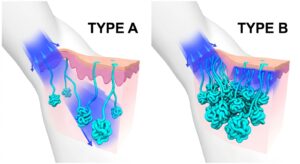
According to multiple observational studies and meta-analyses, achieving optimal sweat reduction without complications requires strict adherence to standardized clinical protocols. The treatment is highly customized, mapping the individual’s sweat distribution and adjusting the energy delivery pattern accordingly. However, outcomes may differ in exceptional cases such as patients with atypical subcutaneous fat thickness, active local skin infections, or metallic implants in the treatment area.
- Sufficient tissue thickness: Evaluating the sub-dermal fat layer to ensure safety of deeper neurovascular structures.
- Accurate template mapping: Utilizing a starch-iodine test to identify the precise margins of hyperactive sweat glands.
- Calibrated anesthesia delivery: Administering tumescent anesthesia to expand the dermal space, separating the target glands from deeper nerve pathways and enhancing safety.
- Active surface monitoring: Ensuring the continuous function of the handpiece cooling mechanism throughout the session.
- Post-treatment cryotherapy: Applying immediate, controlled cooling to minimize post-operative swelling and inflammatory responses.
To assist patients in their clinical decision-making process, the following systematic workflow can be utilized:
- Step 1: If conservative therapies fail to control excessive sweating or persistent odor, schedule a clinical diagnostic assessment.
- Step 2: Undergo personalized mapping and tissue thickness evaluation to verify candidacy for microwave-based treatment.
- Step 3: Proceed with targeted microwave thermolysis combined with active epidermal cooling under professional supervision.
Frequently Asked Questions FAQ
QDoes the procedure cause permanent damage to the skin or surrounding tissues?
No. While the treatment permanently destroys targeted eccrine and apocrine sweat glands at the dermal-fat junction, the superficial skin layers (epidermis and upper dermis) are actively protected by the continuous contact cooling mechanism of the system. Transient swelling, redness, and minor bruising may occur, but these are typical inflammatory responses that resolve spontaneously without permanent tissue damage.
QWhat is the expected recovery timeline and immediate post-care routine?
The procedure is non-surgical, meaning patients can return to normal daily activities almost immediately. Mild swelling and tenderness are expected for a few days. Patients are advised to apply cold packs to the underarm area regularly for the first 24 to 48 hours and avoid vigorous physical exercise or sauna use for approximately one week to facilitate smooth recovery.
QIs the reduction in sweat and odor permanent after a single session?
Yes, the reduction is permanent for the sweat glands that are successfully targeted and destroyed, as sweat glands do not regenerate after birth. Clinical data indicates that a single session can achieve an average sweat reduction of over 80%. However, individual anatomy and sweat gland density vary, and some patients with severe hyperhidrosis may benefit from a second, follow-up session for optimal results.

This content is general medical information, and individual treatment decisions should be made through imaging tests and in-person medical evaluation.
Author: Medical content editor based on medical information research
Reviewed by: Specialist consultation from the relevant department
Last reviewed: 2026-06-25
Reference guideline: 2022 International Hyperhidrosis Society Guidelines
Medical neutrality and closing note
The core of medical decision-making is not to follow a specific device or a trending procedure, but to choose an option that fits each patient’s individual anatomy, condition, risk level, and treatment goals. Every procedure has both advantages and limitations, so decisions should be made after sufficient discussion with an experienced specialist.
[Medical information and copyright notice]
This content is a professional medical column prepared based on medical consultation from 제이케이성형외과의원.
The infographics used in this article are created to support understanding and may differ from actual clinical results.
The information provided is a general medical guideline, and accurate diagnosis and treatment require an in-person evaluation by a qualified specialist.