Should You Get a Hair Transplant for M-Shaped Hair Loss, and What Are the Clinical Selection Criteria?
Why is M-Shaped Hair Loss Progressive, and When Does Non-Surgical Care Fail?
Treatment timing: Surgical intervention is ideal when genetic shedding is clinically stabilized, typically targeting patients with established Norwood Scale Class II to IV recession.
Non-surgical care: Conservative management utilizing DHT inhibitors is highly reasonable during early-stage thinning when follicles are miniaturized but still anatomically viable.
Treatment selection: Choosing between FUE and FUT must be guided by donor hair density, scalp elasticity, the total required graft count, and the patient’s lifestyle expectations regarding post-operative recovery.
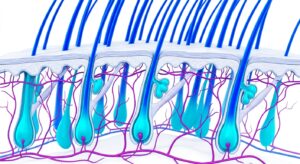
Understanding the Pathophysiology of M-Shaped Hair Loss: Is Surgery Always Necessary?
M-shaped hair loss, biologically classified as male pattern androgenetic alopecia, is a progressive genetic condition driven by dihydrotestosterone (DHT) binding to androgen receptors in frontal hair follicles, leading to follicular miniaturization and eventual irreversible loss. As the hairline recedes, the dermal papilla structures slowly degenerate, making the restoration of lost follicles impossible through medication alone once complete scarring or fibrosis occurs.
Before considering surgical options, establishing a baseline of conservative, non-surgical treatment is critical. Conservative therapies include FDA-approved oral DHT inhibitors (such as Finasteride or Dutasteride), topical Minoxidil, low-level laser therapy (LLLT), and nutritional supplementation like biotin. These treatments are highly effective at slowing down the rate of follicle miniaturization and thicking existing intermediate hairs. However, non-surgical care cannot regenerate hair in areas where the follicle has completely closed or vanished. Thus, while medical therapy is the cornerstone of preserving native hair, a hair transplant is the only viable method to restore density in areas of established recession.
Comparing FUT vs. FUE: Which Method Yields the Highest Graft Survival Rate?
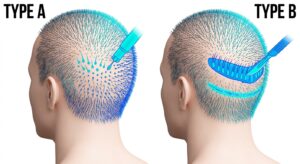
Selecting the right surgical modality is paramount to achieving a natural-looking hairline. The two primary techniques used in modern restorative surgery are Follicular Unit Transplantation (FUT) and Follicular Unit Extraction (FUE). Each method presents distinct clinical advantages and structural limitations depending on individual donor site characteristics.
| Surgical Technique | Key Advantage | Key Limitation | Ideal Candidate |
|---|---|---|---|
| Follicular Unit Transplantation (FUT) | Maximizes graft survival rate by keeping protective tissue intact during strip dissection. | Leaves a linear donor scar in the occipital region, requiring trichophytic closure. | Patients requiring large graft volumes (over 2,500 grafts) with good scalp laxity. |
| Follicular Unit Extraction (FUE) | Minimally invasive, leaving tiny dot scars that are invisible even with short hair. | Higher risk of mechanical follicle damage (transection) during individual punch extraction. | Patients who prefer short hairstyles and require moderate hairline restoration. |
According to official guidelines of the International Society of Hair Restoration Surgery (ISHRS, 2022), both quantitative criteria like graft survival rate and individual donor site laxity should be reviewed together.
Clinical Decision-Making: How to Evaluate Your Readiness for Surgery
To ensure a successful long-term aesthetic outcome, candidates must undergo a thorough multi-dimensional assessment before committing to a transplant. Below is a clinical checklist to evaluate your surgical readiness:
- Shedding Stabilization: Minimal active shedding for at least 6 months, verified by a pull test.
- Medication Compliance: Consistent use of a 5-alpha reductase inhibitor to safeguard the crown and mid-scalp.
- Donor Density Check: Occipital donor area with an average density of over 60–80 follicular units/cm².
- Anatomical Progression: Established Norwood Scale Class II, III, or IV pattern with stable borders.
- Scalp Health: Absence of inflammatory scalp conditions such as seborrheic dermatitis or alopecia areata.
To systematize this decision, clinicians often follow a strict 3-step decision flow:
- Step 1 (If Hair loss is active): Initiate or optimize medical DHT inhibitors for 6 to 12 months to arrest the progressive recession.
- Step 2 (If Hairline is stabilized but recessed): Map donor density and scalp laxity to determine if FUT or FUE is the optimal extraction route.
- Step 3 (Then Proceed to Transplant): Design a conservative, age-appropriate hairline utilizing 1,500 to 2,500 grafts while strictly preserving donor reserves for future procedures.
According to multiple observational studies and meta-analyses published in PubMed (2021), a graft survival rate exceeding 90% is typically achieved when the procedure is performed within the stable phase of hair loss under strict temperature-controlled graft storage. However, outcomes may differ in exceptional cases such as patients with active cicatricial alopecia or severe diffuse unpatterned alopecia (DUPA) where the donor area itself is compromised.
Frequently Asked Questions FAQ
QHow long does it take for transplanted hair to fully grow?
The entire growth cycle takes approximately 9 to 12 months. After transplantation, the grafted hairs undergo a temporary shedding phase (shock loss) within 2 to 4 weeks. New hair shafts begin to sprout from the active follicles around month 3 to 4, with significant cosmetic density visible by month 8, and final volume achieved at 1 year.
QIs it necessary to continue hair loss medication after a hair transplant?
Yes. While transplanted hair follicles taken from the occipital scalp are genetically resistant to DHT and will remain permanently, your native, non-transplanted hairs in the frontal and crown areas remain susceptible to progressive androgenetic alopecia. Discontinuing medication can result in ongoing thinning behind the transplanted hairline, leading to an unnatural appearance.
QWhat is the standard recovery timeline and when can I return to normal activities?
The donor and recipient sites require 10 to 14 days for complete graft engraftment. Mild swelling around the forehead and crusting around the grafts are normal during the first week. Most patients can return to non-strenuous office work within 3 to 5 days, but heavy cardiovascular exercise, swimming, and direct sun exposure should be strictly avoided for at least 2 to 3 weeks.
This content is general medical information, and individual treatment decisions should be made through imaging tests and in-person medical evaluation.
Author: Medical content editor based on medical information research
Reviewed by: Specialist consultation from the relevant department
Last reviewed: 2026-06-16
Reference guideline: International Society of Hair Restoration Surgery (ISHRS) Guidelines 2022
Medical neutrality and closing note
The core of medical decision-making is not to follow a specific device or a trending procedure, but to choose an option that fits each patient’s individual anatomy, condition, risk level, and treatment goals. Every procedure has both advantages and limitations, so decisions should be made after sufficient discussion with an experienced specialist.
[Medical information and copyright notice]
This content is a professional medical column prepared based on medical consultation from 제이케이성형외과의원.
The infographics used in this article are created to support understanding and may differ from actual clinical results.
The information provided is a general medical guideline, and accurate diagnosis and treatment require an in-person evaluation by a qualified specialist.