What Are the Safety Standards for Motiva Breast Augmentation? Key Insights for Patients in Apgujeong-dong
Why Do Patients Seeking Breast Augmentation in Apgujeong-dong Prioritize Long-Term Safety?
When considering breast reconstruction or aesthetic augmentation, selecting the appropriate implant is not merely a matter of desired volume. Patients visiting a plastic surgery specialist in the competitive medical district of Apgujeong-dong increasingly prioritize long-term biocompatibility and structural stability. Modern advances in implant technology aim to address the physical and physiological challenges associated with foreign materials in the human body, emphasizing anatomical harmony and minimizing post-operative complications.
Treatment timing: Ideal for patients with complete musculoskeletal maturity, stable weight, and at least 6 months post-pregnancy or breastfeeding to ensure stable breast tissue volume.
Non-surgical care: Patients seeking minor volume improvements or those hesitant about implants may consider autologous fat grafting or conservative monitoring if they prefer to avoid foreign materials.
Treatment selection: Final choice depends on individual soft tissue pinch tests, chest wall diameter, rib cage symmetry, and the patient’s physical activity levels.

How Does the Biomechanical Structure of Motiva Reduce Capsular Contracture?
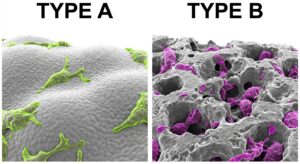
To understand the clinical benefits of modern implants, one must examine the physiological response of breast tissue to foreign objects. Capsular contracture is an immunological and pathobiological process where a dense, fibrous collagen capsule forms and constricts around a breast implant, potentially causing firmness, chronic pain, and aesthetic distortion. The risk of this reaction is highly dependent on the surface characteristics of the implant shell and the body’s inflammatory response.
According to multiple observational studies and meta-analyses, including clinical data published in the *Aesthetic Surgery Journal* (2021), microtextured surfaces significantly lower the incidence of capsular contracture compared to traditional smooth or highly textured surfaces. Motiva’s SmoothSilk surface utilizes advanced microtexture engineering that mimics natural cellular dimensions. This unique configuration minimizes friction between the implant shell and the surrounding breast tissue, preventing excessive myofibroblast activation and subsequent fibrotic thickening. Additionally, the ProgressiveGel cohesive filling provides high viscoelasticity, allowing the implant to mimic natural breast tissue movement by assuming a round shape when lying down and an ergonomic teardrop shape when standing.
| Implant Type | Surface Technology | Viscoelasticity & feel | Est. Rupture Rate (5-Year) | Key Limitation |
|---|---|---|---|---|
| Motiva Ergonomix | SmoothSilk (Microtextured) | Highly dynamic, natural response | Under 1.0% | Higher manufacturing cost |
| Traditional Smooth | Polished Smooth | Static, soft but prone to shifting | Approx. 3.5% | Higher risk of displacement |
| Traditional Textured | Macrotextured (Salt-loss) | Firm, restricted movement | Approx. 2.0% | Associated with double-capsule risk |
According to official guidelines from international plastic surgery societies, both quantitative soft tissue metrics and qualitative patient anatomical characteristics must be evaluated together to determine the optimal implant profiles.
What Are the Diagnostic Selection Criteria at a Plastic Surgery Clinic in Apgujeong-dong?
Achieving a safe and aesthetically satisfying outcome requires a highly individualized diagnostic process. A plastic surgery clinic in Apgujeong-dong must perform precise preoperative measurements to select the ideal implant size, projection, and placement plane. Failure to account for tissue limits can lead to skin thinning, implant palpability, or premature sag.
- Soft Tissue Cover (Pinch Test): Evaluates the thickness of the subcutaneous fat and breast tissue to determine if submuscular, subfascial, or dual-plane placement is required.
- Base Width of the Breast: Dictates the maximum width of the implant to avoid unnatural lateral projection or medial collision (synmastia).
- Rib Cage and Spine Alignment: Assesses minor chest wall asymmetry or scoliosis, which can cause implants to sit at different heights.
- Skin Elasticity and Laxity: Evaluates if the skin envelope can support the chosen volume without requiring a concurrent mastopexy (breast lift).
- Pectoralis Major Muscle Strength: Influences the choice of the surgical pocket, especially for athletic individuals who use their chest muscles frequently.
If-Then Clinical Decision Flow:
- If the patient has thin soft tissue coverage (pinch test less than 2cm), Then a dual-plane or submuscular approach is indicated to prevent implant edges from becoming visible or palpable.
- If the patient maintains a highly active lifestyle with frequent upper-body exercises, Then a subfascial placement of a highly viscoelastic Motiva implant may be preferred to avoid muscle distortion.
- If pre-existing chest wall asymmetry is detected during pre-operative 3D imaging, Then implants of differing volumes and profiles are designated for each side to achieve visual symmetry.
However, outcomes may differ in exceptional cases such as patients with severe chest wall deformities like pectus excavatum, where standard placement parameters must be modified through specialized surgical adjustments.
Frequently Asked Questions FAQ
QHow long does the swelling last after Motiva breast augmentation in Apgujeong-dong?
Initial post-operative swelling and mild bruising typically peak within the first 3 to 5 days and begin to subside significantly over the next 2 weeks. Most of the minor residual swelling resolves within 3 to 6 months, during which the implant settles into its natural anatomical position.
QDoes Motiva prevent capsular contracture completely?
While the advanced SmoothSilk microtexture and high biocompatibility of Motiva implants drastically reduce the risk of capsular contracture to under 1% based on clinical data, no implant can guarantee zero risk. Preventive surgical techniques, strict sterile protocols, and proper post-operative care remain essential.
QWhen can I return to normal exercise routines?
Light walking is encouraged from the day after surgery to promote circulation. However, strenuous cardiovascular exercises and heavy lifting must be avoided for at least 4 weeks, and direct chest-isolating workouts should be restricted for 8 weeks to allow the tissues to heal and prevent implant displacement.

This content is general medical information, and individual treatment decisions should be made through imaging tests and in-person medical evaluation.
Author: Medical content editor based on medical information research
Reviewed by: Specialist consultation from the relevant department
Last reviewed: 2026-07-22
Reference guideline: 2022 International Society of Aesthetic Plastic Surgery (ISAPS) Guidelines
Medical neutrality and closing note
The core of medical decision-making is not to follow a specific device or a trending procedure, but to choose an option that fits each patient’s individual anatomy, condition, risk level, and treatment goals. Every procedure has both advantages and limitations, so decisions should be made after sufficient discussion with an experienced specialist.
[Medical information and copyright notice]
This content is a professional medical column prepared based on medical consultation from 제이케이성형외과의원.
The infographics used in this article are created to support understanding and may differ from actual clinical results.
The information provided is a general medical guideline, and accurate diagnosis and treatment require an in-person evaluation by a qualified specialist.