Which Hair Transplant Method Ensures the Highest Follicle Survival Rate? FUE vs. FUT Decision Guide
Why Does the Choice of Hair Transplant Technique Matter for Patients in Garosugil?
For individuals experiencing advanced hair thinning, deciding to undergo a hair transplant is a significant clinical milestone. In the field of aesthetic plastic surgery, selecting the appropriate surgical technique is critical to securing high graft viability and natural aesthetic integration. Many individuals seeking surgical restoration in Garosugil frequently express concern regarding donor site morbidity, post-operative downtime, and whether follicular unit excision (FUE) or follicular unit transplantation (FUT) yields superior density. Understanding the underlying physiological variables of each method is the first step toward an informed clinical outcome.
Treatment timing: Hair transplantation is indicated when androgenetic alopecia progresses past Norwood Stage 3, and medical therapies no longer restore satisfactory density.
Non-surgical care: Conservative treatments, including 5-alpha-reductase inhibitors (Finasteride/Dutasteride) and topical Minoxidil, are highly recommended for at least 6 to 12 months to stabilize active hair loss before surgical intervention.
Treatment selection: The choice between FUE and FUT is guided by scalp laxity, the required number of grafts, donor hair density, and the patient’s tolerance for a linear donor scar.
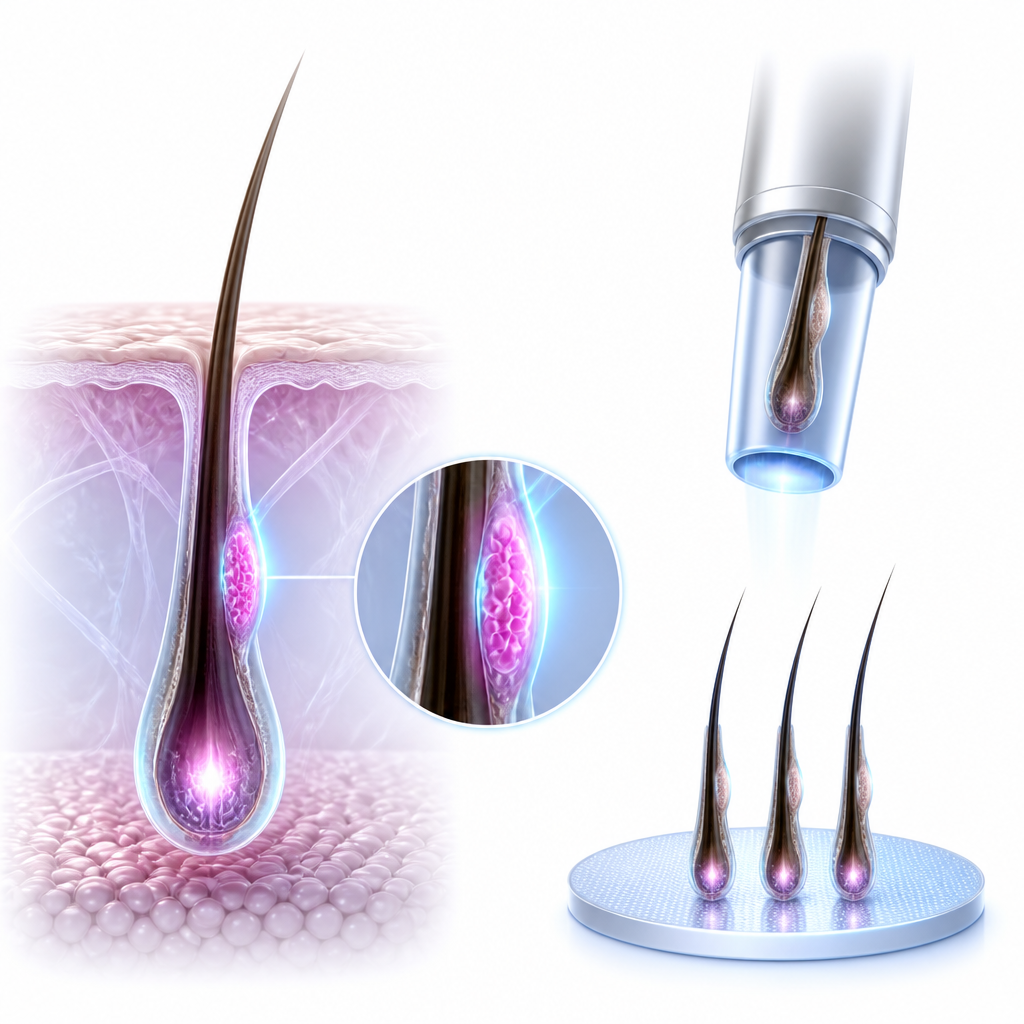
How Do FUE and FUT Differ in Pathophysiology and Follicular Survival?
Androgenetic alopecia is a progressive, genetically determined hair loss disorder characterized by the systematic miniaturization of androgen-sensitive hair follicles under the influence of dihydrotestosterone (DHT) in the scalp. To counteract this, hair restoration relies on the physiological principle of donor dominance, which states that follicles harvested from the occipital region retain their intrinsic resistance to DHT even when transplanted to balding recipient sites. The primary differences between FUE and FUT lie in how these terminal follicles are harvested.
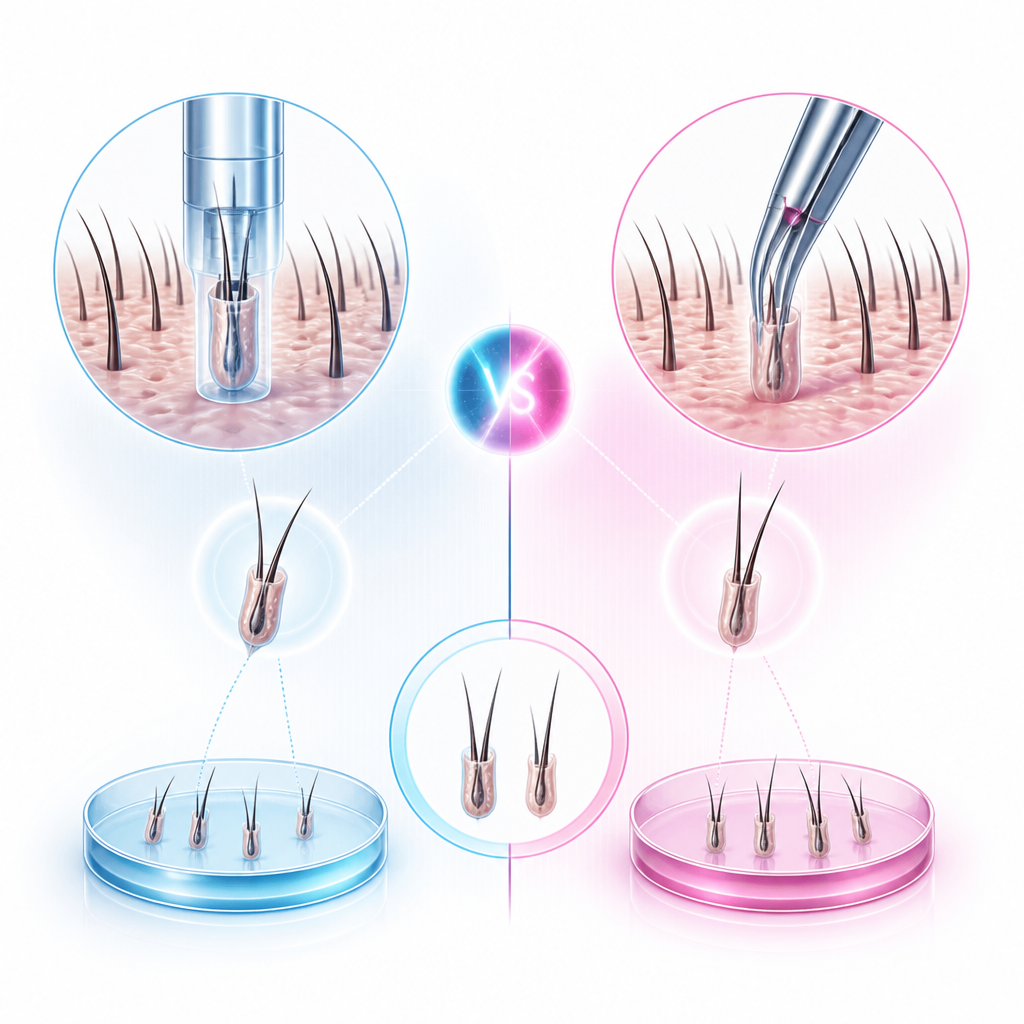
According to domestic and international clinical guidelines published in the Journal of Aesthetic Plastic Surgery (2022), follicular survival rates exceed 90% for both methods when executed by proficient surgical teams. However, the mechanical handling of the tissue differs. FUT involves harvesting a single horizontal strip of donor scalp, which is then dissected under high-magnification stereomicroscopes. This method preserves the surrounding protective adipose tissue around the follicular units, optimizing survival rates. Conversely, FUE utilizes a micro-punch tool to extract individual follicular units directly from the scalp. While FUE avoids a linear scar, it carries a slightly higher risk of follicular transection if the surgeon’s angle deviates from the natural exit angle of the hair shaft.
| Feature | Follicular Unit Excision (FUE) | Follicular Unit Transplantation (FUT) |
|---|---|---|
| Extraction Technique | Individual follicular units extracted via micro-punch (0.8mm-1.0mm) | Harvest of a single strip of donor tissue, followed by microscopic dissection |
| Donor Scarring | Tiny, diffuse hypopigmented circular scars (nearly invisible) | Fine, linear horizontal scar in the occipital region |
| Primary Benefit | Minimal post-operative pain and rapid return to vigorous activity | Maximum graft yield with lower transection rates for large-scale sessions |
| Primary Limitation | Higher mechanical manipulation and potential follicle transection risk | Scalp tension in the donor site and longer surgical recovery window |
According to official guidelines from the International Society of Hair Restoration Surgery (ISHRS, 2021), both quantitative graft survival rates and qualitative donor area preservation must be comprehensively assessed to achieve optimal long-term density.
How Should You Determine Your Eligibility for Hair Restoration in Garosugil?
Every individual’s donor profile and hair loss progression are unique. Patients considering plastic surgery for hair restoration in Garosugil must undergo a rigorous diagnostic protocol before finalizing their surgical path. The following clinical checklist outlines the prerequisite steps for a successful transplant plan:
- Trichoscopy Analysis: Comprehensive measurement of hair caliber and donor follicle density to calculate available donor capacity.
- Scalp Elasticity Assessment: Evaluating skin laxity in the donor region to determine whether FUT strip extraction can be closed safely without excess wound tension.
- Graft Count Estimation: Correlating current Norwood staging with targeted recipient density to define total lifetime graft requirements.
- Medical Background Review: Ruling out active scarring alopecias or systemic microvascular compromises that could inhibit capillary neovascularization around newly placed grafts.
- Pharmacological Stabilization: Ensuring that active non-surgical treatments have stabilized general hair loss progression prior to surgical planning.
To assist in this process, clinical decisions typically follow a three-step evaluation pathway:
- Step 1 (If): If donor hair density is high and scalp laxity is limited -> Then FUE is clinically indicated to avoid linear scar expansion and excessive tissue tension.
- Step 2 (If): If megasessions exceeding 3,500 grafts are required to treat extensive alopecia -> Then FUT is favored to utilize the maximum donor density with minimal transactional loss.
- Step 3 (If): If the patient requires an immediate return to professional duties without shaving the donor area -> Then Non-shaven FUE is selected, acknowledging the increased surgical duration and precise technical demand.
Frequently Asked Questions FAQ
QIs the hair transplant procedure permanent?
Yes, harvested hair from the occipital region retains its genetic resistance to DHT due to the principle of donor dominance, meaning transplanted follicles will continue to grow for a lifetime.
QHow long does the shedding phase last after a hair transplant?
According to clinical data, transient shedding of the transplanted hair shafts occurs between weeks 2 and 6 post-procedure, with new hair growth beginning around month 3 and full results visible by month 12.
QCan a patient undergo multiple hair transplant sessions?
Yes, depending on donor area reserve capacity. However, outcomes may differ in exceptional cases such as severe diffuse unpatterned alopecia (DUPA) where the donor zone itself is unstable and lacks permanent terminal hair follicles.
This content is general medical information, and individual treatment decisions should be made through imaging tests and in-person medical evaluation.
Author: Medical content editor based on medical information research
Reviewed by: Specialist consultation from the relevant department
Last reviewed: 2026-07-08
Reference guideline: 2021 International Society of Hair Restoration Surgery (ISHRS) Guidelines
Medical neutrality and closing note
The core of medical decision-making is not to follow a specific device or a trending procedure, but to choose an option that fits each patient’s individual anatomy, condition, risk level, and treatment goals. Every procedure has both advantages and limitations, so decisions should be made after sufficient discussion with an experienced specialist.
[Medical information and copyright notice]
This content is a professional medical column prepared based on medical consultation from 제이케이성형외과의원.
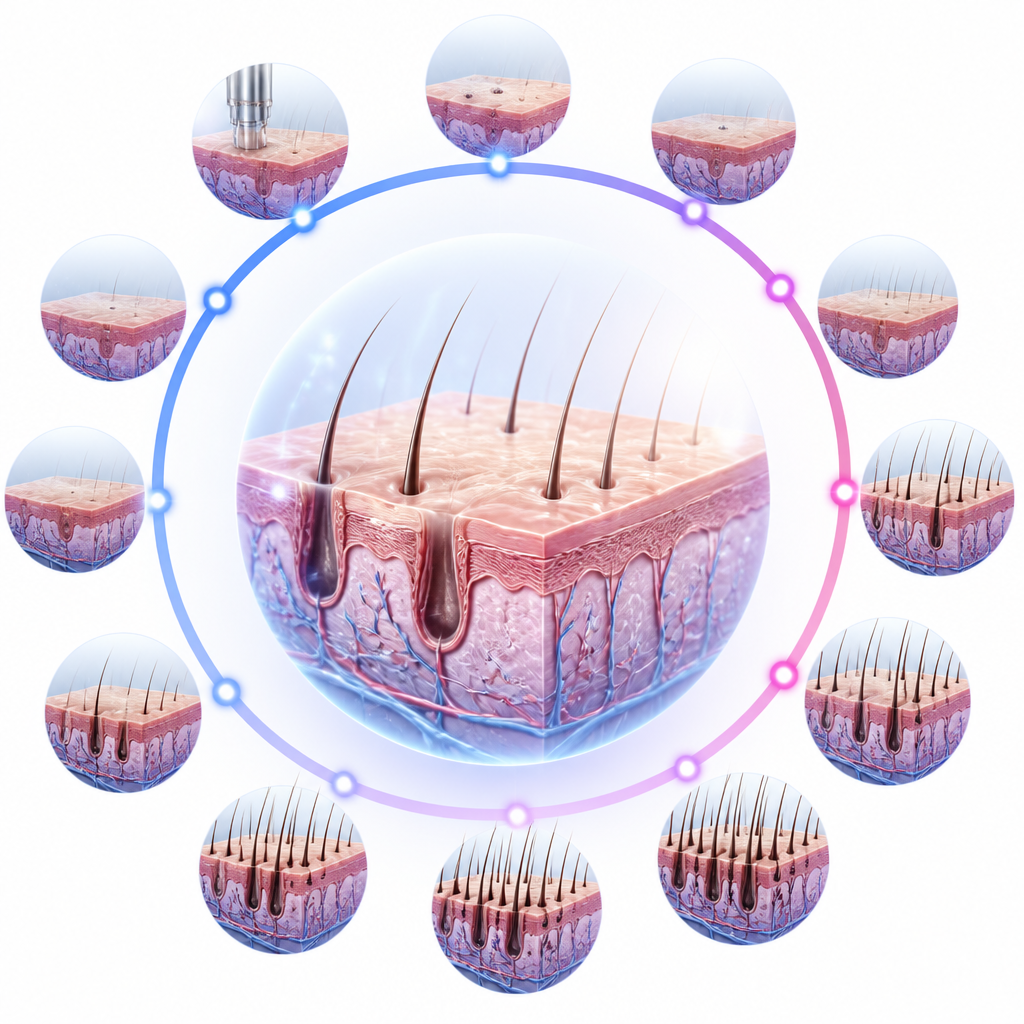
The infographics used in this article are created to support understanding and may differ from actual clinical results.
The information provided is a general medical guideline, and accurate diagnosis and treatment require an in-person evaluation by a qualified specialist.