A Clinical Guide to Motiva Breast Augmentation in Garosugil: Safety, Rheology, and Selection Criteria
Why Is Gel Rheology and Biocompatibility Critical in Modern Breast Augmentation?
When considering aesthetic breast refinement at Garosugil plastic surgery, understanding the interaction between foreign biomaterials and living tissue is paramount. Breast hypoplasia or postpartum parenchymal involution is fundamentally a structural change where the breast envelope loses volume, leading to tissue laxity and altered breast projection. To restore this harmoniously, modern aesthetic surgery relies heavily on advanced cohesive gel technology.
Historically, the body\’s immunological response to breast implants has been a primary concern. When an implant is placed, the host immune system initiates a foreign body reaction, forming a collagenous capsule around the shell. Capsular contracture is a progressive pathological condition where this physiological capsule undergoes excessive myofibroblastic proliferation and collagen cross-linking, resulting in tightening, pain, and cosmetic distortion. Minimizing this risk requires surface texturing that respects cellular mechanics and a cohesive gel that behaves like natural adipose tissue.
Treatment timing: Ideal candidacy is established after complete physical development (typically age 20 or older) and when the patient maintains a stable weight, ensuring the overlying soft tissue envelope is structurally mature.
Non-surgical care: Conservative management, such as temporary external breast prostheses or autologous fat grafting, is appropriate for individuals desiring minor volume enhancements (less than one cup size) without significant tissue laxity.
Treatment selection: Decisions must be guided by precise clinical measurements, including the skin pinch test of the upper pole, base tissue diameter, rib cage compliance, and the patient\’s lifestyle and physical activity profile.
What Are the Key Structural Differences in Modern Cohesive Gel Implants?
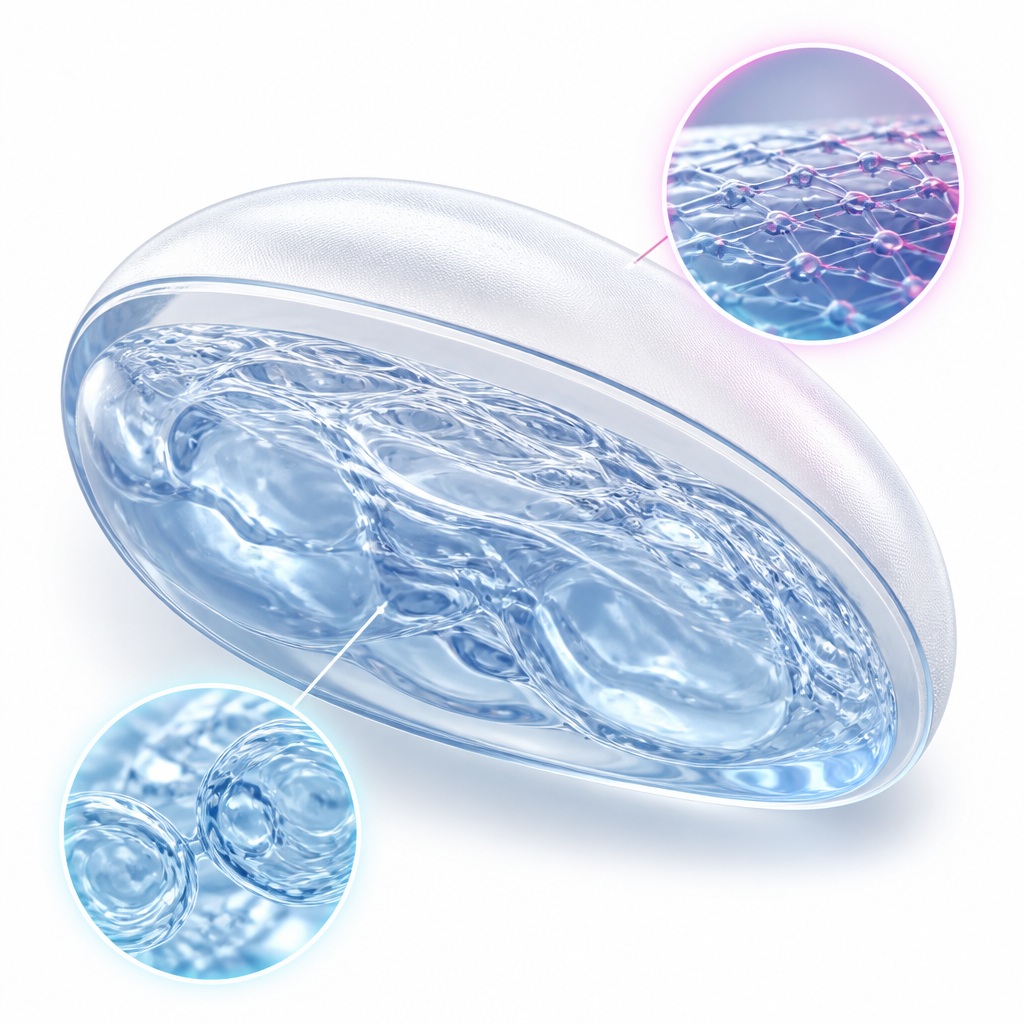
According to multiple observational studies and meta-analyses, the mechanical performance of an implant is defined by its rheology—the study of how matter flows and deforms. Traditional implants often utilized high-viscosity, stiff cohesive gels to maintain vertical projection, which frequently resulted in an unnatural fullness in the upper pole when the patient was in an upright position. Conversely, older liquid-filled smooth implants posed higher risks of rippling and gel migration.
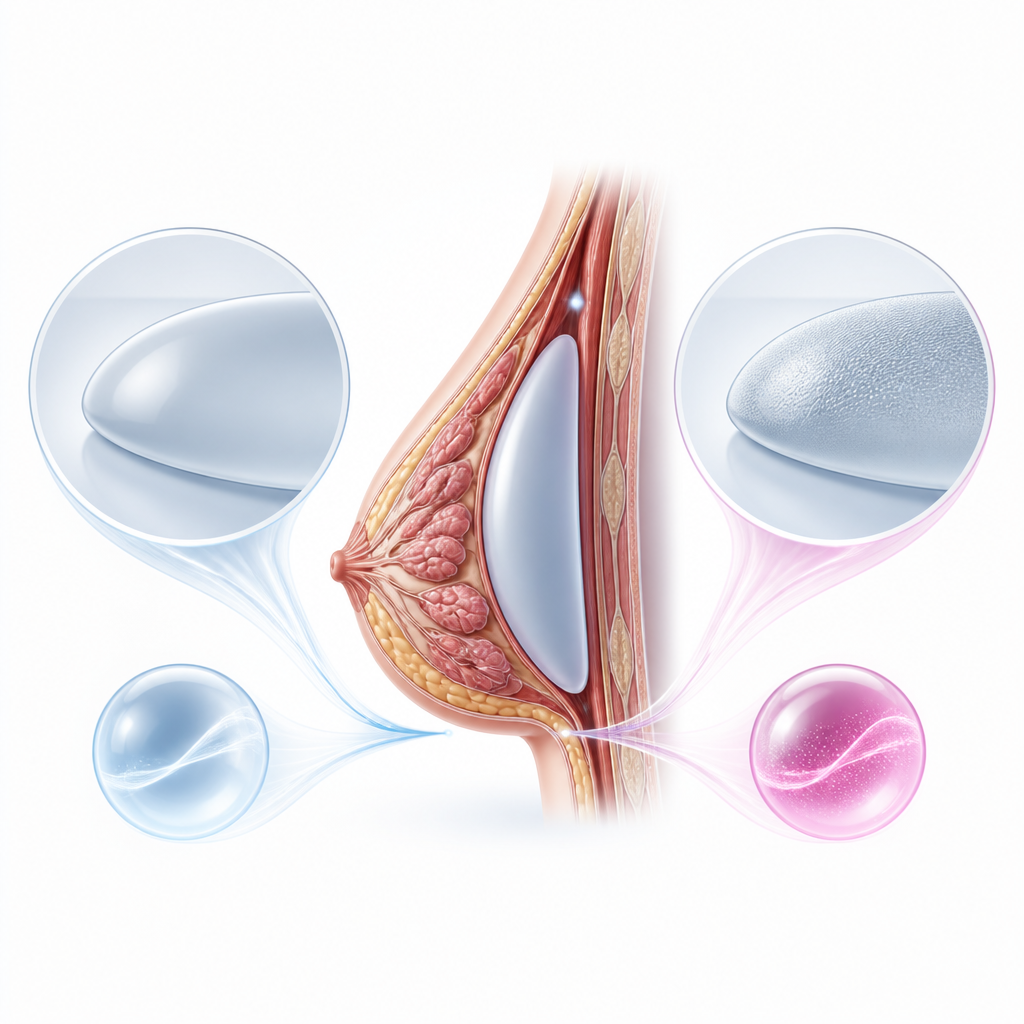
Modern cohesive gel technology, specifically exemplified by Motiva Ergonomix, addresses this limitation by utilizing highly elastic, progressive cohesive gels (such as ProgressiveGel Ultima). This material adaptively alters its shape according to gravity: behaving like a round implant when lying down to maintain lateral volume, and shifting its maximum projection point downward to mimic a natural teardrop shape when standing. Below is a comparative overview of different implant configurations used in contemporary practice:
| Implant Category | Surface Texture | Gel Viscoelasticity | Key Clinical Advantage | Primary Limitation |
|---|---|---|---|---|
| Motiva Ergonomix | SmoothSilk Nano-textured | High elasticity, low shear storage modulus | Dynamic adaptation to gravity, minimal contracture risk | Higher financial investment required |
| Traditional Textured | Macro/Micro-textured | High stiffness, high shape retention | Maintains shape and projection regardless of position | Associated with higher rates of double capsule and late seroma |
| Classic Smooth | Polished Smooth Surface | Medium to high viscosity | Soft palpable feel in early stages | Higher rate of rotational displacement and pocket migration |
According to official guidelines from the Aesthetic Surgery Education and Research Foundation (ASERF, 2021), both quantitative anatomical measurements and qualitative clinical judgment regarding soft tissue thickness must be analyzed concurrently to select the correct surgical pathway.
Clinical Criteria: Are You a Candidate for Nano-Textured Implants?
While patient desire for volume is a major factor, surgical planning at Garosugil must respect objective structural limitations. A thorough preoperative examination is crucial to determine if a patient\’s soft tissue envelope can safely support and conceal the implant over several decades.
To establish clinical eligibility and plan the surgical technique, specialists utilize specific anatomical benchmarks:
- Soft tissue pinch test: A measurement of the upper pole subcutaneous fat of less than 2 cm suggests that a subglandular placement may result in visible implant edges or rippling, indicating a dual-plane or submuscular pocket is required.
- Breast Base Width (BBW): The horizontal diameter of the breast parenchyma limits the maximum diameter of the implant shell to prevent lateral displacement or synmastia.
- Parenchymal thickness: Adequate glandular coverage (greater than 1.5 cm) allows for safer subglandular or subfascial placement options.
- Rib cage morphology: Asymmetries, pectus excavatum, or pectus carinatum demand custom adjustments in volume and projection profiles to prevent lateral or medial asymmetry.
For patients considering breast augmentation, navigating the clinical path involves a structured decision-making process:
Step 1 (IF): The patient presents with extremely thin subcutaneous tissue (pinch test < 2 cm) and minimal glandular tissue.
(THEN): A dual-plane pocket dissection is recommended, using a highly elastic implant like Motiva to ensure soft coverage and prevent visible implant rippling.
Step 2 (IF): The patient exhibits mild parenchymal ptosis (sagging) but possesses good skin elasticity.
(THEN): An inframammary fold (IMF) incision with subfascial placement of a cohesive gel implant is utilized to restore upper-pole fullness without a full mastopexy.
Step 3 (IF): The patient has significant chest wall asymmetry or irregular rib cage contours.
(THEN): A hybrid approach, combining a smaller nano-textured implant with autologous fat grafting around the medial and superior borders, is indicated to smooth out structural irregularities.
However, outcomes may differ in exceptional cases such as patients presenting with severe, pre-existing systemic autoimmune disorders or undergoing secondary revisional surgeries with compromised tissue vascularity from prior radiation therapy.
Frequently Asked Questions FAQ
QDoes Motiva breast augmentation require post-operative massage?
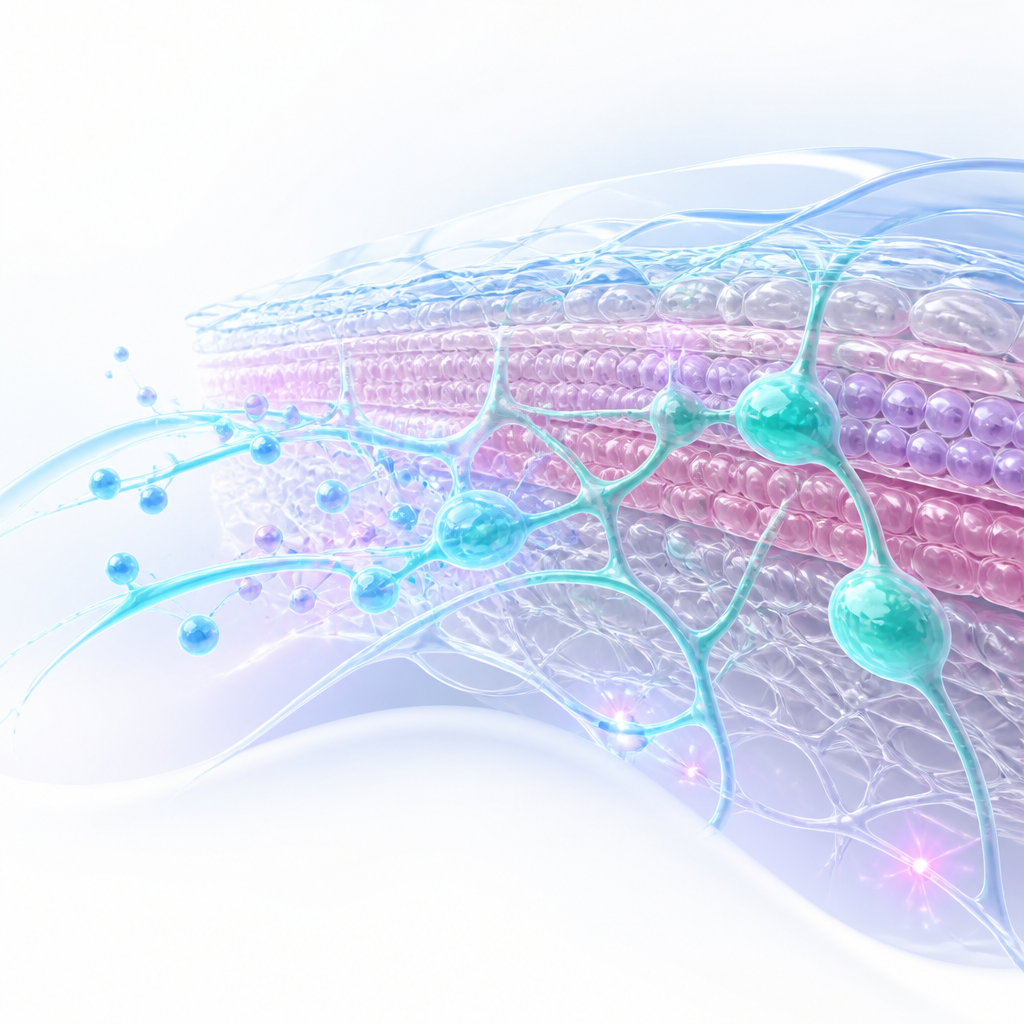
No. Traditional macro-textured or older smooth implants sometimes required aggressive post-operative massage to prevent the contracture of the surgical pocket. However, the SmoothSilk nano-textured surface of Motiva implants is engineered to promote high biocompatibility and cell-friendly integration with surrounding tissues. Aggressive massaging of nano-textured surfaces is contraindicated as it can disrupt early cellular attachment, cause micro-friction, and potentially lead to chronic fluid accumulation (seroma).
QHow does the safety profile of nano-textured implants compare to textured ones?
According to safety databases, macro-textured implants have been associated with mechanical friction and a rare immunological condition known as Breast Implant-Associated Anaplastic Large Cell Lymphoma (BIA-ALCL). Nano-textured surfaces, such as Motiva\’s, are classified as smooth by international standards (ISO 14607). They do not cause the same mechanical shear stress or chronic inflammatory response, which significantly reduces the risk of BIA-ALCL and double capsule formation while maintaining low capsular contracture rates (under 1.5% in multi-year clinical trials).
QWhen is it safe to return to physical activities after Motiva breast augmentation?
While recovery is highly individualized, light walking can typically begin on the first post-operative day to promote healthy circulation. Patients should avoid lifting objects heavier than 5 kg and limit upper-body movements above shoulder level for the first 2 weeks. Aerobic exercises, such as jogging, can usually be resumed after 4 weeks, while heavy upper-body strength training should be restricted for 6 to 8 weeks to allow complete healing of the pectoral muscle and pocket closure.
This content is general medical information, and individual treatment decisions should be made through imaging tests and in-person medical evaluation.
Author: Medical content editor based on medical information research
Reviewed by: Specialist consultation from the relevant department
Last reviewed: 2026-07-03
Reference guideline: 2022 Aesthetic Surgery Education and Research Foundation (ASERF) Clinical Guidelines
Medical neutrality and closing note
The core of medical decision-making is not to follow a specific device or a trending procedure, but to choose an option that fits each patient’s individual anatomy, condition, risk level, and treatment goals. Every procedure has both advantages and limitations, so decisions should be made after sufficient discussion with an experienced specialist.
[Medical information and copyright notice]
This content is a professional medical column prepared based on medical consultation from 제이케이성형외과의원.
The infographics used in this article are created to support understanding and may differ from actual clinical results.
The information provided is a general medical guideline, and accurate diagnosis and treatment require an in-person evaluation by a qualified specialist.