How Can You Achieve a Truly Natural Touch and Silhouette in Breast Augmentation?
Why is Achieving a Natural Texture the Ultimate Goal of Modern Breast Reconstruction?
For many individuals considering breast enhancement, the primary concern transitions from mere volume expansion to the long-term texture, natural drape, and physiological movement of the breast. The definition of a natural result is not static; it refers to how the breast behaves during physical movement, when lying down, and upon palpation. Biologically, breast augmentation is a complex tissue-integration process. When an implant is introduced, the body initiates a natural foreign-body response, forming a thin, healthy membrane of collagen fibers called a capsule around the implant shell. If this process occurs harmoniously, the implant remains soft and undetectable. However, if tissue integration is poor or if the pocket is dissected with excessive trauma, a pathological healing response can lead to localized tissue tightening, compromise the tactile outcome, and cause the implant to feel rigid or unnatural.
Treatment timing: Ideal surgical planning should occur when the patient has achieved a stable physiological weight and after at least six months post-lactation to ensure accurate parenchymal volume measurement.
Non-surgical care: Conservative management, including targeted acoustic wave therapy, manual lymphatic drainage, and specific medical compression garments, is highly reasonable and effective for early-stage tissue hardening (Baker Grade I/II) to optimize pocket compliance without revision surgery.
Treatment selection: The choice of surgical approach depends heavily on the patient\’s baseline skin elasticity, anatomical pinch test measurements, subglandular tissue thickness, and individual lifestyle demands.
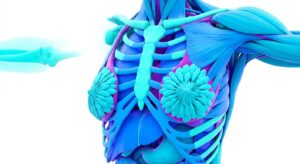
How Do Implant Properties and Placement Techniques Determine the Post-Operative Feel?
The tactile sensation of a breast implant is governed by the physical interaction between the cohesive gel viscosity, the implant shell surface, and the anatomical plane of placement. Traditionally, implants were placed either entirely beneath the breast gland (subglandular) or completely beneath the pectoralis major muscle (submuscular). Modern plastic surgery has evolved to utilize the dual-plane approach, where the upper portion of the implant is secured under the muscle for a smooth upper-pole transition, while the lower portion remains under the breast gland to allow natural projection and movement. According to multiple clinical studies, matching the implant\’s filling ratio with the patient\’s soft tissue envelope is crucial; overfilling can cause a firm, artificial feel, while underfilling increases the risk of visible rippling along the borders.
According to domestic and international clinical guidelines, including a comprehensive meta-analysis published in the Aesthetic Surgery Journal (2021), the surface topography of the implant also plays a pivotal role. The study indicated that micro-textured and highly cohesive ergonomic gels adapt dynamically to gravity, shifting from a round shape when lying down to a natural teardrop shape when standing. However, outcomes may differ in exceptional cases such as patients with severe chest wall deformities, pectus excavatum, or extremely thin parenchymal tissue measuring less than 1 centimeter in the pinch test, where additional fat grafting (hybrid breast augmentation) may be required to achieve optimal coverage.
| Implant & Technique Parameter | Tactile & Aesthetic Advantage | Clinical Limitation or Consideration |
|---|---|---|
| Ergonomic Cohesive Gel | Adapts dynamically to gravity; mimics natural fat texture and movement. | Requires precise pocket size; cost of advanced cohesive material is higher. |
| Dual-Plane Dissection (Type I/II) | Reduces upper-pole visibility; excellent natural drape and soft feel. | Technically demanding; requires a longer surgical learning curve. |
| Smooth High-Compliance Shell | Highly mobile pocket movement; minimal friction against surrounding tissue. | Higher dependency on strict post-operative positioning and pocket care. |
According to official guidelines from the International Society of Aesthetic Plastic Surgery (ISAPS), achieving a natural tactile sensation requires balancing three critical variables: the intrinsic elasticity of the patient\’s skin, the viscosity of the cohesive silicone gel, and the surgical preservation of the surrounding fascia.
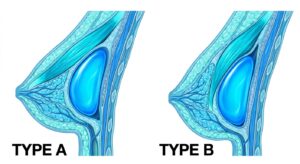
What is the Clinical Protocol for Ensuring Soft Tissue Integration and Preventing Contracture?
To secure a soft, natural result, preventing capsular contracture is paramount. Capsular contracture occurs when excessive scar tissue forms and squeezes the implant, leading to hardness, pain, and distortion. In modern plastic surgery, strict sterile protocols, the use of a Keller Funnel for minimal contact insertion, and absolute hemostasis during dissection have collectively reduced the incidence of contracture significantly. According to several multi-center clinical trials, the rate of capsular contracture when using dual-plane techniques combined with cohesive gel implants ranges from 1.8% to 3.2% over a five-year observation period, compared to historical rates exceeding 10% with older techniques.
To guide clinical decisions, specialists utilize a systematic workflow to match the patient\’s physical state with the safest surgical pathway. Below is the standard protocol implemented at advanced clinics such as 제이케이성형외과의원 to minimize complication risk and guarantee natural tissue integration:
- Pre-Operative High-Resolution Ultrasound: Mapping the precise thickness of the pectoralis major muscle and glandular tissue to determine the exact depth of the pocket dissection.
- Precision Electro-Cautery and Pocket Irrigation: Utilizing specialized, low-heat dissection tools to minimize thermal damage to tissues, followed by antibiotic triple-drug irrigation.
- No-Touch Delivery Technique: Implementing a sterile sleeve delivery system to prevent skin bacteria from contaminating the implant surface during insertion.
- Dynamic Post-Operative Management: Designing personalized recovery pathways including mild compression therapies, capsulectomy prevention medications (such as singulair when indicated), and tissue-softening ultrasound therapies.
Step 1 (If): If the patient\’s pinch test on the upper breast pole is less than 2 cm, (Then) select a Type II dual-plane placement to ensure adequate muscle coverage and prevent implant edge visibility.
Step 2 (If): If high tissue elasticity is present combined with moderate glandular volume, (Then) utilize a high-cohesive, low-viscosity ergonomic gel implant to maximize soft, natural sway and projection.
Step 3 (If): If early-stage capsular tightness is suspected during 3-month follow-up, (Then) initiate localized physical rehabilitation, manual mobilization, and non-invasive ultrasound therapy immediately.
Frequently Asked Questions FAQ
QWill the breast touch feel natural immediately after the surgery?
No, immediately following the surgery, the breasts will feel firm and may appear sits high on the chest wall due to localized swelling, muscle tension, and stretching of the skin envelope. As the pectoral muscle relaxes and the tissue undergoes natural remodeling over 3 to 6 months, the implant drops into its final position, and the texture becomes significantly softer and indistinguishable from natural tissue.
QHow does the incision site affect the natural touch and recovery of the breast?
The choice of incision site—whether inframammary fold (IMF), transaxillary (armpit), or periareolar—does not directly alter the final softness of the implant itself, but it influences the accuracy of the pocket dissection. An IMF incision allows the surgeon direct visualization, which can facilitate precise pocket creation and minimize tissue trauma, leading to optimal tissue healing and a highly compliant pocket.
QDoes a larger implant size compromise the natural feel of the breast?
Yes, choosing an implant size that exceeds the natural base width and tissue capacity of the breast can thin out the overlying subcutaneous fat and breast tissue. This thinning makes the implant edges more palpable and increases the risk of a firm, unnatural feel. Selecting a size proportional to your thoracic anatomy is essential for maintaining soft tissue coverage and a natural touch.

This content is general medical information, and individual treatment decisions should be made through imaging tests and in-person medical evaluation.
Author: Medical content editor based on medical information research
Reviewed by: Specialist consultation from the relevant department
Last reviewed: 2026-07-02
Reference guideline: 2023 American Society of Plastic Surgeons (ASPS) & International Society of Aesthetic Plastic Surgery (ISAPS) Joint Safety Guidelines
Medical neutrality and closing note
The core of medical decision-making is not to follow a specific device or a trending procedure, but to choose an option that fits each patient’s individual anatomy, condition, risk level, and treatment goals. Every procedure has both advantages and limitations, so decisions should be made after sufficient discussion with an experienced specialist.
[Medical information and copyright notice]
This content is a professional medical column prepared based on medical consultation from 제이케이성형외과의원.
The infographics used in this article are created to support understanding and may differ from actual clinical results.
The information provided is a general medical guideline, and accurate diagnosis and treatment require an in-person evaluation by a qualified specialist.