Why does the success of a hair transplant depend entirely on the initial follicular preparation and graft survival?
For patients experiencing progressive hair thinning, a hair transplant represents a long-term clinical solution. However, the final aesthetic outcome is not merely about the number of hairs moved, but the percentage of transplanted follicles that successfully survive and grow in their new environment. In the field of advanced plastic surgery, optimizing the graft survival rate requires deep physiological understanding, specialized micro-surgical techniques, and strict adherence to tissue preservation protocols.
During a surgical procedure, hair follicles are temporarily severed from their blood supply, undergoing a period of warm ischemia. If the follicular units are damaged during extraction, dried out during processing, or kept outside the body for too long, their survival rate drops significantly. To combat this, advanced practitioners utilize specialized storage solutions, maintain low-temperature environments, and use microscopic dissection to ensure the follicular dermal papilla remains entirely intact.
Treatment timing: Surgical intervention is recommended when progressive hair thinning has stabilized under medical management and the donor area shows healthy, dense follicular units.
Non-surgical care: Conservative treatments, including FDA-approved pharmacological therapies and low-level laser therapy, are highly reasonable for early-stage thinning to delay or minimize the scope of surgical intervention.
Treatment selection: The choice between extraction methods depends heavily on the patient’s scalp laxity, the extent of androgenetic alopecia, donor area density, and post-operative downtime expectations.
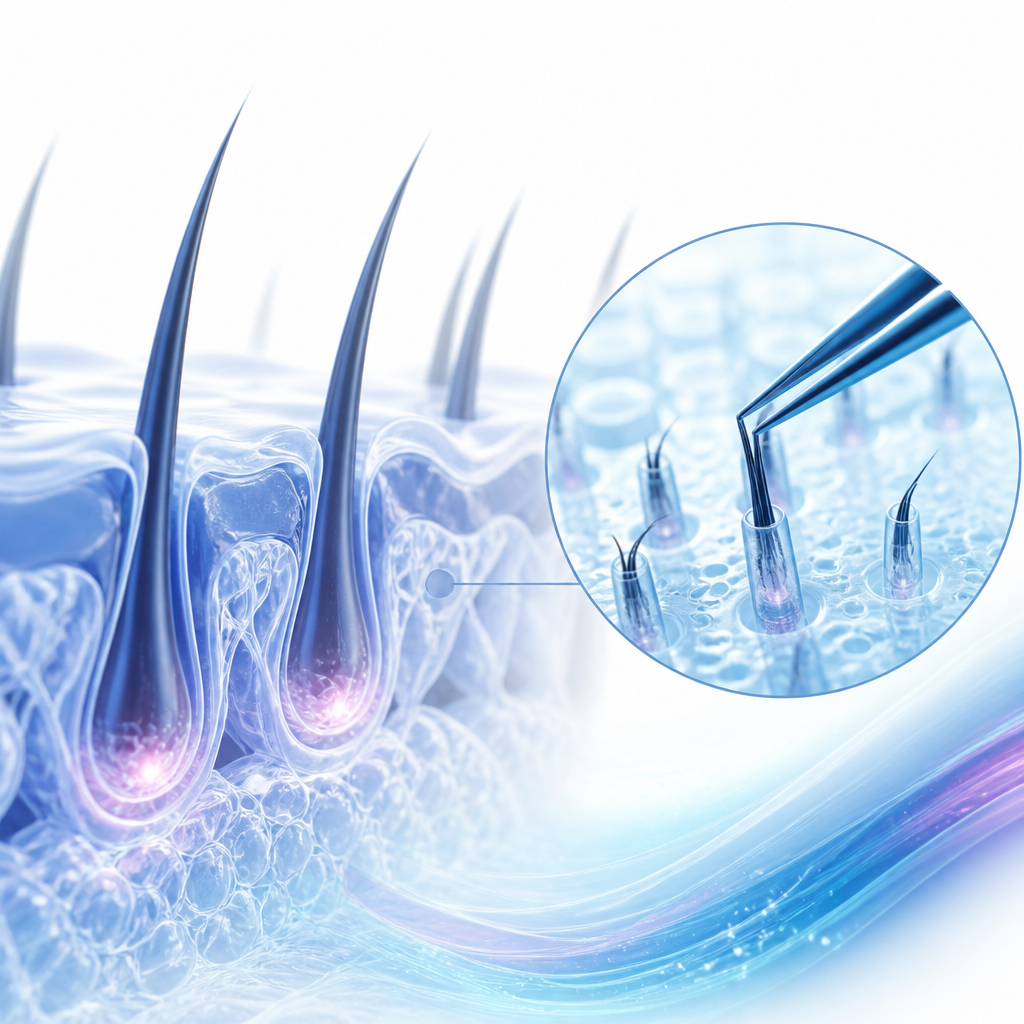
What is the biological mechanism of progressive androgenetic alopecia and the principle of donor dominance?
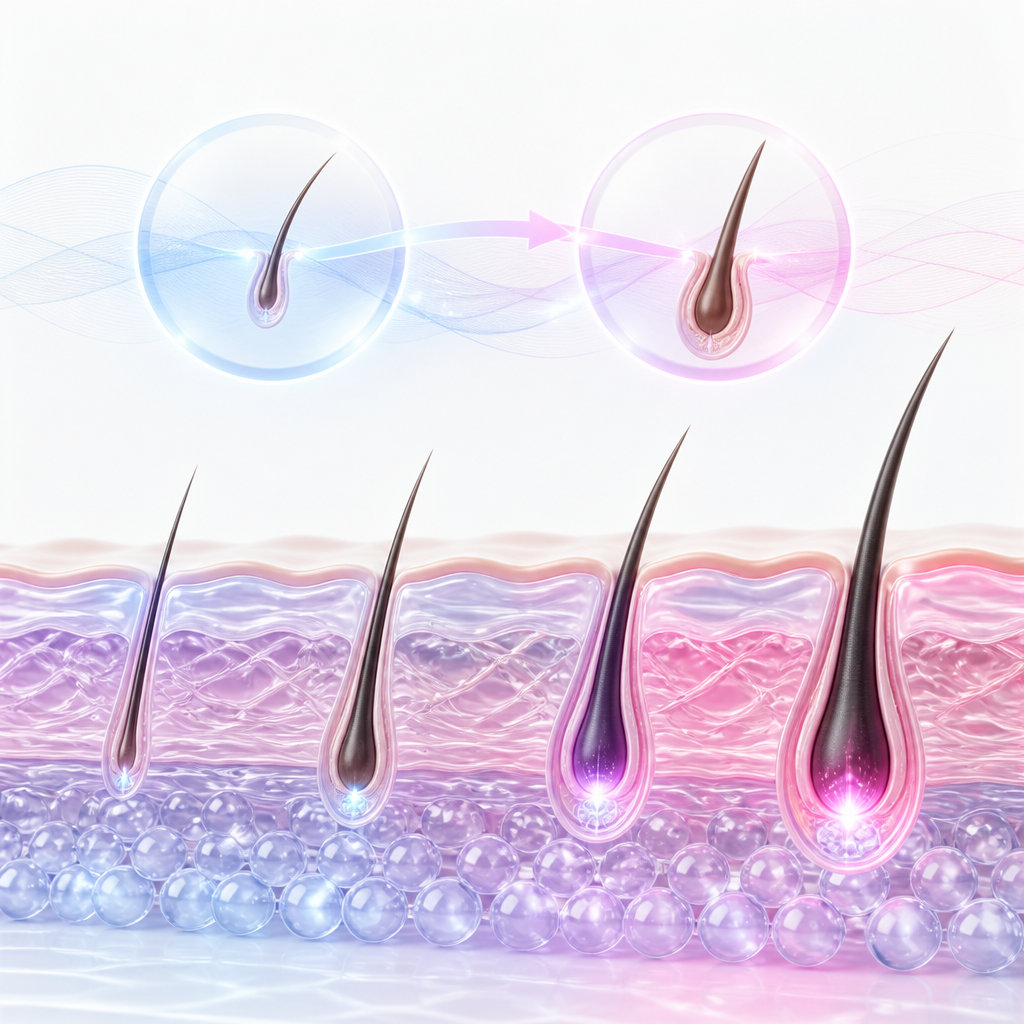
Androgenetic alopecia is a progressive genetically predetermined disease characterized by the gradual miniaturization of scalp hair follicles driven by dihydrotestosterone (DHT) binding to androgen receptors. Over successive hair cycles, the anagen (growth) phase shortens, and the hair shaft becomes progressively thinner and shorter, eventually resulting in the complete inactivation of the follicle. This progressive condition typically follows a patterned distribution, affecting the frontal hairline, mid-scalp, and vertex, while sparing the occipital region.
The entire scientific foundation of hair transplantation rests on the principle of donor dominance. This principle, first established in early dermatological studies, dictates that hair follicles harvested from the occipital region (the back of the head) retain their inherent genetic resistance to DHT even when transplanted into areas previously affected by androgenetic alopecia. Therefore, the transplanted hair is expected to persist and grow throughout the patient’s lifetime. However, to achieve a natural look, plastic surgery specialists must meticulously plan the angle, depth, and distribution of these harvested grafts.
Before opting for surgery, conservative medical management should be thoroughly evaluated. For patients with early-stage miniaturization without prominent bald areas, pharmacological interventions like topical minoxidil and oral 5-alpha-reductase inhibitors are highly effective. These treatments slow the miniaturization process and preserve existing hair. When hair loss has progressed beyond the point where medical management can restore density (typically Norwood Scale III or higher), surgical restoration at a qualified plastic surgery clinic near Apgujeong Rodeo Station becomes the primary recommended option.
How do FUE and FUT methods compare in terms of graft yield and donor site recovery?
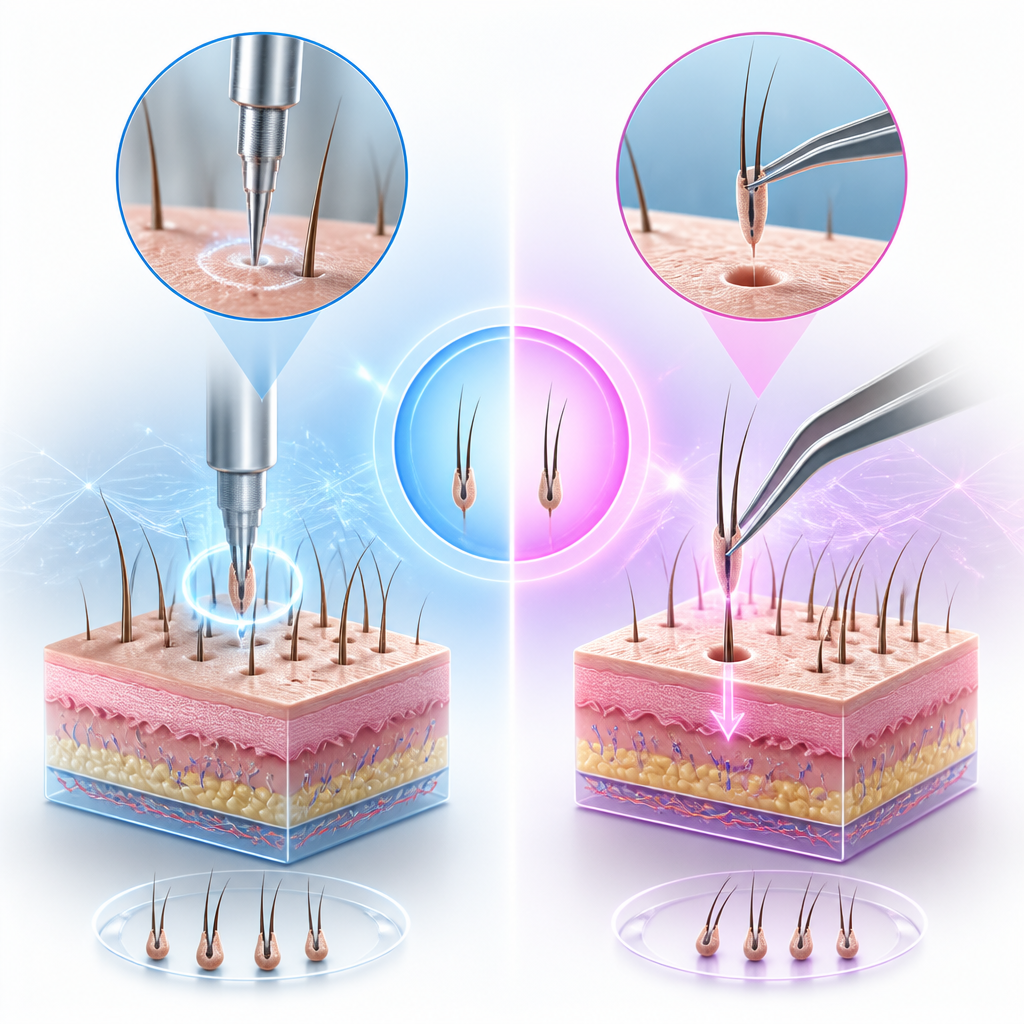
When planning a hair transplant, choosing the right extraction method is crucial for balancing graft yield with donor-site healing. The two primary techniques used in modern clinics are Follicular Unit Extraction (FUE) and Follicular Unit Transplantation (FUT).
| Harvesting Method | Extraction Technique | Clinical Advantages | Surgical Limitations |
|---|---|---|---|
| FUE (Follicular Unit Extraction) | Individual extraction of follicular units using micro-punches (0.7mm 0.9mm). | Minimal linear scarring, quicker donor-site healing, and reduced post-operative pain. | Higher rate of follicular transection if performed without advanced precision; requires a larger shaved donor area. |
| FUT (Follicular Unit Transplantation) | Excision of a narrow strip of donor scalp tissue, followed by microscopic dissection. | Lower follicular transection rate, high graft yield in a single session, no extensive donor shaving required. | Leaves a permanent fine linear scar in the donor area; requires scalp elasticity; longer initial healing period. |
According to official guidelines from the International Society of Hair Restoration Surgery (ISHRS), both quantitative scalp laxity measurements and qualitative follicular density must be evaluated together to determine the optimal extraction technique for each individual patient.
What are the key clinical indicators for choosing the right timing for surgical hair restoration?
According to multiple observational studies and meta-analyses published in the Journal of Plastic and Reconstructive Surgery (2022), graft survival rates consistently exceed 90-95% when the procedure is executed using standardized hypothermic storage solutions (such as chilled saline or holding solutions containing ATP) and precise graft placement techniques. However, achieving these high success rates requires careful patient selection and realistic expectations.
Surgical timing is highly critical. Performing a transplant too early in a young patient with rapid, unstable hair loss can lead to an unnatural appearance as the native hair continues to recede behind the transplanted area. Consequently, plastic surgery specialists near Apgujeong Rodeo Station emphasize stabilizing active hair loss through medical therapy for at least six months before proceeding with surgery.
However, outcomes may differ in exceptional cases such as cicatricial (scarring) alopecia, severe diffuse unpatterned alopecia (DUPA), or where systemic endocrine disorders have not been properly managed prior to surgical intervention. In these instances, alternative therapies must be prioritized over immediate surgical hair restoration.
Essential Clinical Checklist for Hair Transplant Candidates:
- Stabilized Hair Loss: Active hair shedding has been managed and stabilized using medical therapies.
- Adequate Donor Density: The occipital donor area must possess sufficient follicular unit density to cover the recipient area.
- Healthy Scalp Elasticity: Especially critical if considering the FUT (strip) method to ensure a tension-free donor closure.
- Realistic Aesthetic Goals: Clear understanding that hair transplantation redistributes existing hair rather than creating new hair follicles.
- Commitment to Long-Term Maintenance: Willingness to continue medical therapies post-surgery to protect non-transplanted native hair.
If-Then Decision Flow for Hair Restoration Selection:
- IF hair loss is in the early stages with diffuse thinning but a stable hairline, THEN prioritize conservative medical therapies (Finasteride/Minoxidil) and reassess after 6 to 12 months.
- IF the frontal hairline has recessed significantly but the donor area is highly dense with poor scalp elasticity, THEN select Follicular Unit Extraction (FUE) to avoid tension-related healing complications.
- IF a large area of baldness requires maximum graft volume in a single session without shaving the donor area, THEN consider Follicular Unit Transplantation (FUT) or a hybrid approach combined with microscopic graft preparation.
Frequently Asked Questions FAQ
QWhat causes temporary shock loss after a hair transplant?
Temporary shock loss, or transient effluvium, is a common reaction to the physiological stress and localized surgical trauma of the procedure. It affects both transplanted and surrounding native hair follicles, causing them to temporarily enter the telogen (resting) phase. This shedding typically begins 2 to 6 weeks after surgery. It is fully reversible, and healthy new hair shafts begin to emerge from the follicles within 3 to 4 months.
QHow long does it take to see the final aesthetic results?
The timeline for hair transplant growth is a gradual physiological process. Newly transplanted hairs usually shed within the first month. New growth begins around month 3 to Patients can expect to see noticeable cosmetic improvement at 6 to 9 months, with the final density, caliber, and natural texture fully realized between 12 and 18 months post-surgery.
QWhy is post-operative care so crucial for graft survival?
During the first 3 to 5 days after surgery, the transplanted grafts are not yet securely anchored; they rely entirely on simple diffusion from the surrounding tissue for survival. Any physical trauma, friction, pressure, or improper washing can easily dislodge or damage the delicate follicles. Strict adherence to post-operative instructions, including gentle washing techniques, avoiding strenuous exercise, and keeping the scalp hydrated, directly impacts the final survival rate.
This content is general medical information, and individual treatment decisions should be made through imaging tests and in-person medical evaluation.
Author: Medical content editor based on medical information research
Reviewed by: Specialist consultation from the relevant department
Last reviewed: 2026-07-01
Reference guideline: 2023 International Society of Hair Restoration Surgery (ISHRS) Practice Guidelines
Medical neutrality and closing note
The core of medical decision-making is not to follow a specific device or a trending procedure, but to choose an option that fits each patient’s individual anatomy, condition, risk level, and treatment goals. Every procedure has both advantages and limitations, so decisions should be made after sufficient discussion with an experienced specialist.
[Medical information and copyright notice]
This content is a professional medical column prepared based on medical consultation from 제이케이성형외과의원.
The infographics used in this article are created to support understanding and may differ from actual clinical results.
The information provided is a general medical guideline, and accurate diagnosis and treatment require an in-person evaluation by a qualified specialist.