How Can You Minimize and Treat Scalp Scars and Side Effects After a Hair Transplant?
Why Do Side Effects and Scars Occur After Hair Restoration?
Hair transplantation is an effective surgical solution for androgenetic alopecia, a progressive condition characterized by the gradual miniaturization of hair follicles. However, because the procedure requires the surgical harvesting and redistribution of healthy donor follicles, it naturally triggers the body’s physiological wound healing response. Whether utilizing Follicular Unit Extraction (FUE) or Follicular Unit Transplantation (FUT), microscopic dermal damage occurs, which can lead to various complications if not managed carefully. The healing process involves sequential phases of hemostasis, inflammation, proliferation, and tissue remodeling, during which abnormal collagen synthesis can result in visible scarring or donor area depletion.
Treatment timing: Active scar prevention must begin immediately after re-epithelialization (typically 10 to 14 days post-surgery), while therapeutic intervention for mature scars is ideal between 3 to 6 months when the tissue remodeling phase is active.
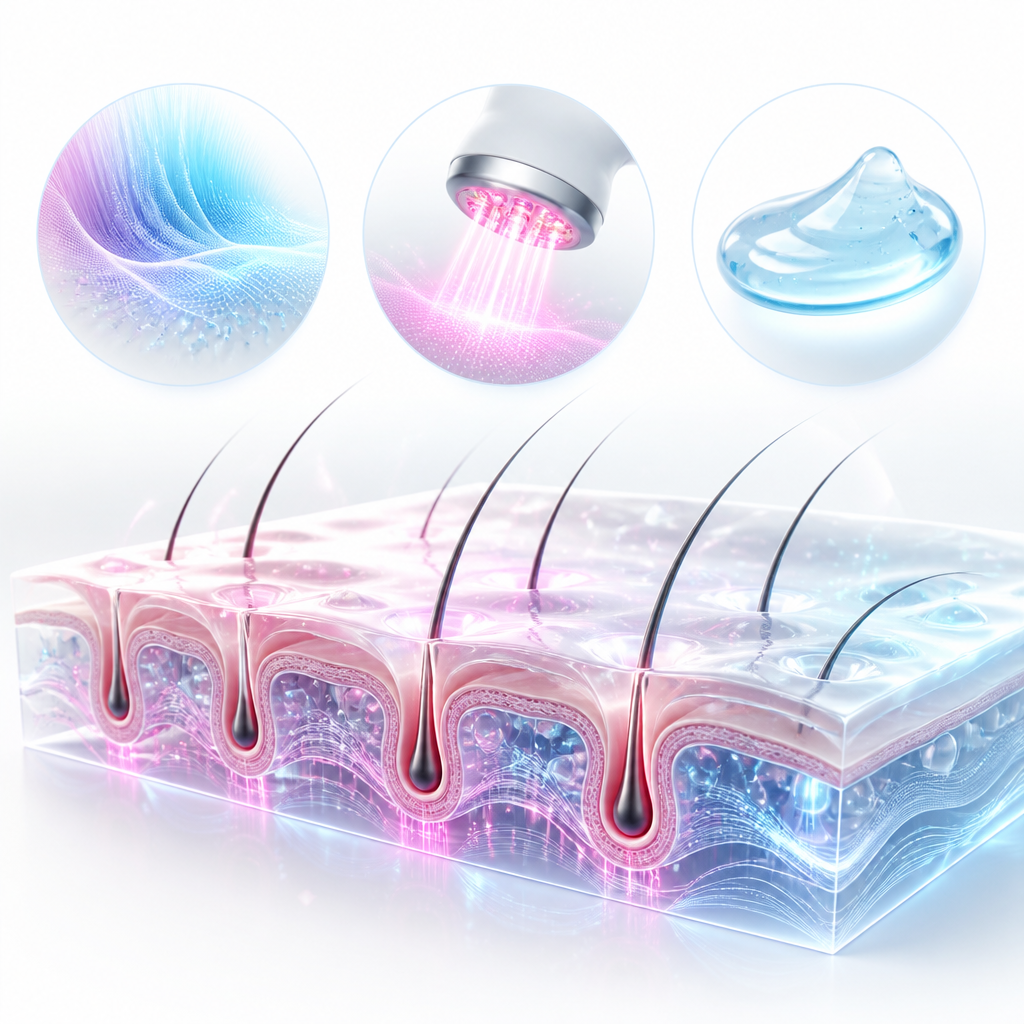
Non-surgical care: Conservative management, including silicone-based gels, local compression, and low-level laser therapy (LLLT), is highly effective and recommended for patients showing early signs of hypertrophic scarring without severe tissue contraction.
Treatment selection: Therapeutic decisions must be guided by the patient’s scalp elasticity, individual healing characteristics, donor hair density, and whether the scar tissue is hypertrophic, atrophic, or keloidal.
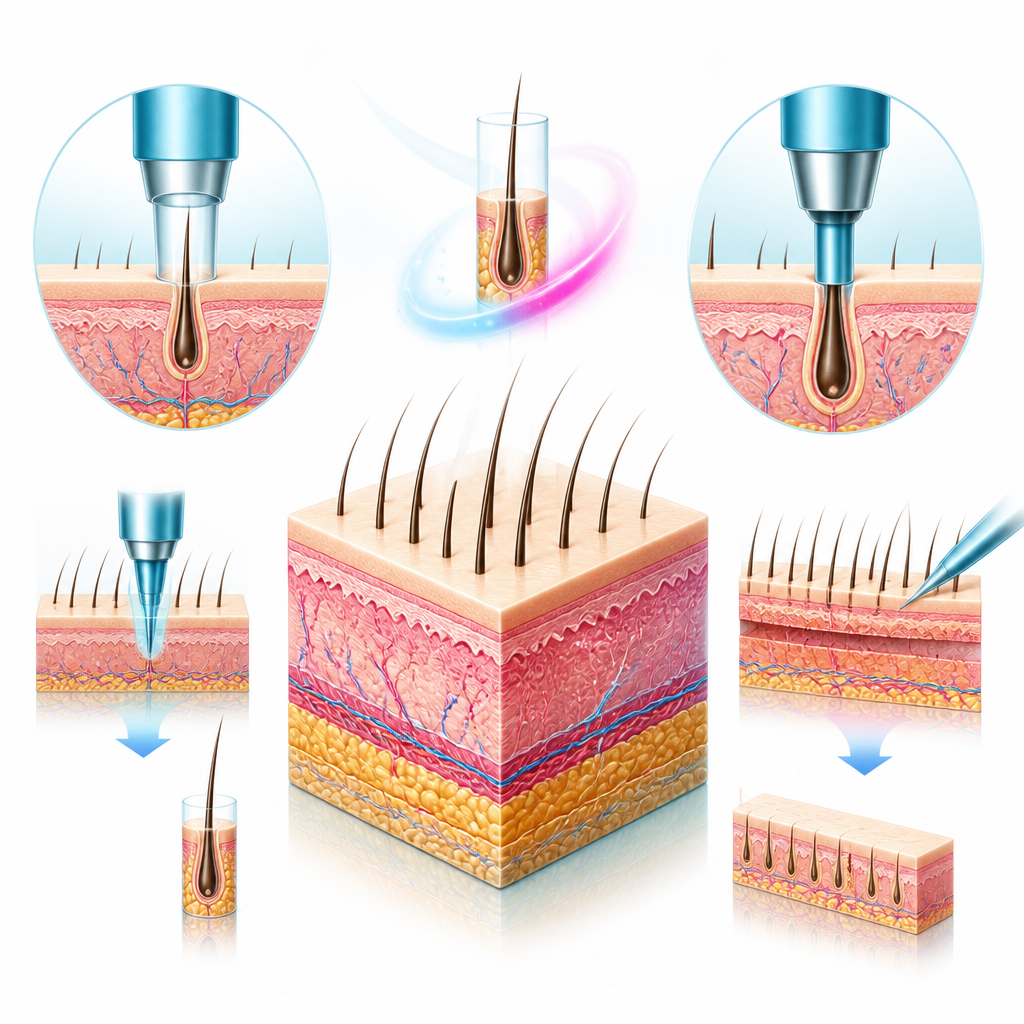
FUE vs. FUT: Analyzing Scar Formation and Recovery Patterns
According to multiple observational studies and meta-analyses published in international hair restoration journals, the structural differences in harvesting methods directly dictate the nature of the remaining scar. Follicular Unit Transplantation (FUT) involves harvesting a linear strip of donor scalp tissue, which is subsequently closed using trichophytic closure techniques. This method typically leaves a fine linear scar across the occipital region. On the other hand, Follicular Unit Extraction (FUE) utilizes individual micro-punches (ranging from 0.8mm to 1.0mm in diameter) to extract individual follicular units, resulting in numerous dispersed circular micro-scars. While FUE scars are less noticeable when hair is worn short, improper harvesting patterns or using punches that are too large can lead to a ‘moth-eaten’ appearance, known as donor area depletion.
During the remodeling phase, abnormal tissue tension or infection can trigger hypertrophic scarring, where excessive collagen accumulates within the wound boundaries. If left untreated, this can cause localized cicatricial alopecia, preventing hair from growing naturally in the surrounding areas. Clinical guidelines suggest that while FUE reduces immediate downtime, both methods carry distinct risks of shock loss—a temporary shedding of existing hairs adjacent to the harvested or transplanted sites due to localized vascular compromise and surgical stress.
| Surgical Method | Scar Characteristic | Typical Recovery Window | Primary Scarring Risk | Primary Conservative Care |
|---|---|---|---|---|
| FUT (Strip) | Linear donor scar | 14 to 21 days | Linear stretching, hypertrophic scar | Silicone sheeting, suture tension management |
| FUE (Punch) | Punctate micro-scars | 7 to 10 days | Donor depletion, hypopigmented dots | Antiseptic washing, early LLLT sessions |
According to official guidelines from the International Society of Hair Restoration Surgery (ISHRS, 2021), both quantitative donor density evaluations and individual physiological healing characteristics must be assessed comprehensively prior to selecting the extraction methodology.
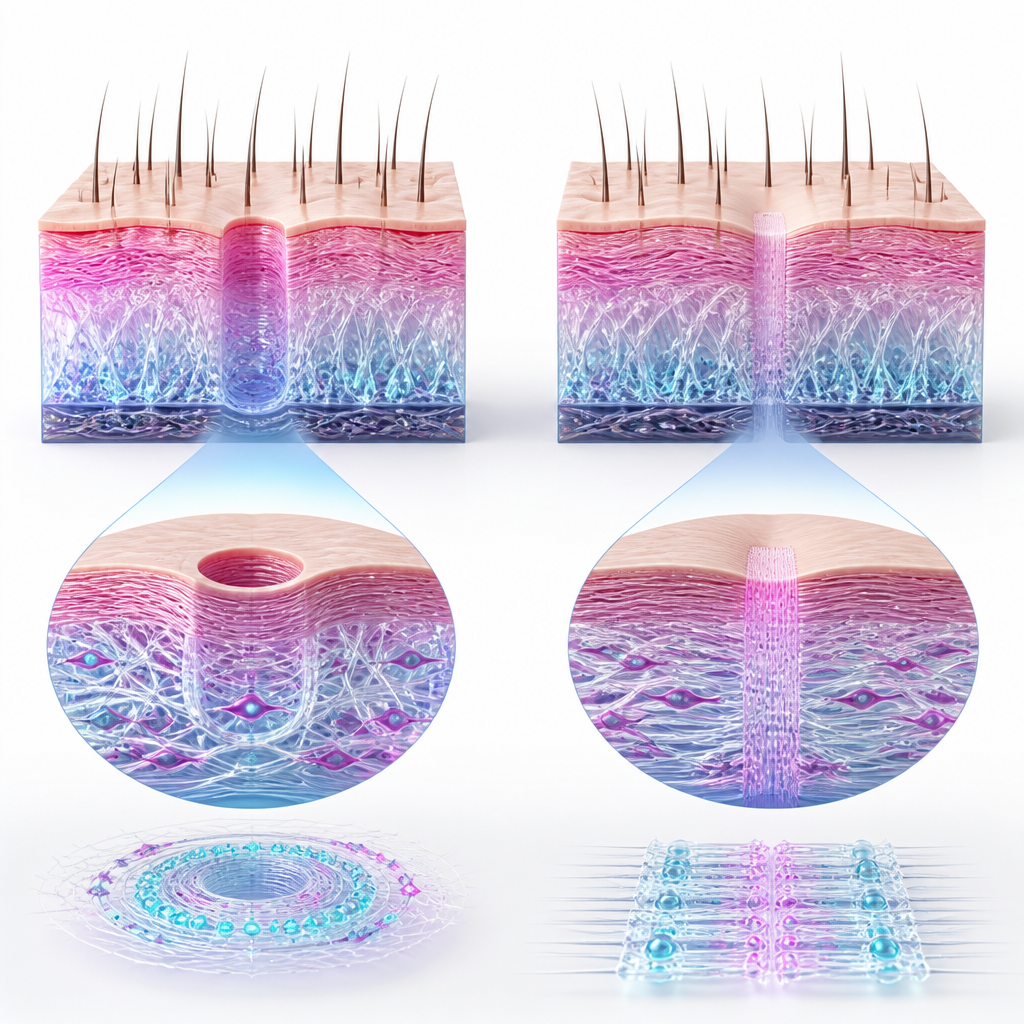
What Are the Standard Protocols for Post-Transplant Scar Management?
Managing and preventing scalp scars requires a proactive approach that combines patient compliance at home with advanced clinical therapies. Within the first 48 hours, keeping the donor and recipient areas clean and hydrated is crucial to prevent crusting and secondary bacterial folliculitis, which can worsen scar outcomes. Once the epidermal barrier has fully closed (usually around day 10 to 14), topical therapies can be introduced to modulate collagen production and tissue remodeling. However, outcomes may differ in exceptional cases such as patients with genetic predispositions to keloid formation or those with pre-existing autoimmune skin conditions, where standard protocols must be adapted with extreme caution.
For patients experiencing persistent redness or early scar elevation, clinical interventions can prevent the progression of mature scar tissue. Dermatological lasers, such as non-ablative fractional lasers, can stimulate healthy collagen rearrangement and reduce erythema by targeting the microvasculature. In cases where localized raised hypertrophic scars have already developed, intralesional triamcinolone acetonide injections can be administered to break down excess collagen bonds and flatten the lesion. For permanent, wide scars where hair cannot regrow, scalp micro-pigmentation (SMP) offers a highly effective cosmetic solution to camouflage the tissue and blend it seamlessly with surrounding hair follicles.
Essential Post-Operative Care Checklist
- Gentle Cleansing: Wash the scalp daily with lukewarm water and a mild, non-perfumed antiseptic shampoo to avoid disrupting healing grafts.
- Moisture Maintenance: Apply saline sprays or medical-grade recovery ointments as prescribed during the initial 7 days to promote rapid re-epithelialization.
- Friction Prevention: Avoid wearing tight hats, helmets, or sleeping in positions that apply direct mechanical pressure or friction to the donor site for at least 3 weeks.
- UV Protection: Protect the healing donor and recipient areas from direct sunlight using physical shade or loose hats, as UV radiation can cause permanent post-inflammatory hyperpigmentation (PIH).
- Activity Modification: Refrain from heavy lifting, high-intensity workouts, or swimming pools for 4 weeks to minimize donor site tension and infection risks.
Post-Transplant Scar Decision-Making Flow
To determine the most appropriate course of action for post-transplant scar management, patients and clinicians should follow this structured three-step clinical assessment:
- Phase 1 (Week 2 to Week 6): If persistent erythema or micro-scabbing is present, initiate topical silicone gel therapy and low-level laser therapy (LLLT) to stabilize the epidermal barrier.
- Phase 2 (Month 2 to Month 6): If palpable, raised, or itchy hypertrophic scar tissue is detected, consult a specialist at 제이케이성형외과의원 for potential intralesional steroid micro-injections to control local inflammation.
- Phase 3 (After Month 6): If wide, hypopigmented, or bald cicatricial scar tissue remains permanent, evaluate advanced aesthetic options such as scalp micro-pigmentation (SMP) or surgical scar revision.
Frequently Asked Questions FAQ
QCan donor site scars after a hair transplant be completely erased?
While it is clinically impossible to completely erase a scar because the deep dermal layer has been incised or punched, modern medical treatments can significantly minimize their visibility. Treatments like fractional lasers, silicone gels, and scalp micro-pigmentation (SMP) can refine the texture and color of the scar to make it virtually imperceptible to the naked eye.
QWhen is the safest time to start professional scar treatments after the procedure?
Early-stage non-invasive treatments, such as silicone-based gels and gentle moisturizing, should begin immediately after the surgical wounds have fully closed and scabs have naturally fallen off, typically around 10 to 14 days post-op. More invasive interventions, including laser resurfacing or steroid micro-injections, are generally introduced starting from 4 to 8 weeks, depending on clinical evaluations of tissue maturation.
QWhat increases the risk of severe scar stretching or hypertrophic scarring?
The primary risk factors include excessive physical tension placed on the scalp (such as premature heavy neck exercises after FUT), genetic susceptibility to keloids, surgical harvesting techniques that use oversized punches, and localized secondary wound infections. Maintaining proper posture and strictly following post-operative care protocols during the first month can substantially mitigate these risks.
This content is general medical information, and individual treatment decisions should be made through imaging tests and in-person medical evaluation.
Author: Medical content editor based on medical information research
Reviewed by: Specialist consultation from the relevant department
Last reviewed: 2026-06-30
Reference guideline: 2021 International Society of Hair Restoration Surgery (ISHRS) Wound Healing and Scar Management Consensus Guideline
Medical neutrality and closing note
The core of medical decision-making is not to follow a specific device or a trending procedure, but to choose an option that fits each patient’s individual anatomy, condition, risk level, and treatment goals. Every procedure has both advantages and limitations, so decisions should be made after sufficient discussion with an experienced specialist.
[Medical information and copyright notice]
This content is a professional medical column prepared based on medical consultation from 제이케이성형외과의원.
The infographics used in this article are created to support understanding and may differ from actual clinical results.
The information provided is a general medical guideline, and accurate diagnosis and treatment require an in-person evaluation by a qualified specialist.